How to Watch TV in the Dark Without Bad Effects on Your Eyes
To watch TV in the dark without hurting your eyes, it’s important to use soft, warm ambient lighting. This helps reduce harsh contrast and eye strain, making your viewing experience much more comfortable.
Position your TV at eye level and sit the right distance away to avoid neck and eye discomfort.
Also, lower your screen brightness and switch to warmer color settings. Considering blue light filters can be a great idea too.
Taking regular breaks and doing simple eye exercises will keep your eyes feeling fresh and comfortable.
Keep these tips in mind, and you’ll discover even more ways to protect your vision while enjoying your favorite shows.
Key Takeaways
- Use soft, warm ambient lighting behind the TV to reduce contrast and ease eye strain in dark rooms. It really helps to create a more comfortable viewing environment.
- Position the TV at eye level and keep a viewing distance of about 1.5 to 2.5 times its diagonal size. This setup feels natural and prevents unnecessary strain.
- Lower the screen brightness and switch to warm color settings or use preset “Movie” modes. These adjustments minimize harsh light exposure and make watching easier on your eyes.
- Apply blue light filters and remember to take regular breaks. Doing some simple eye exercises during those breaks can improve focus and reduce fatigue.
- Sit in a supportive chair with a slight angle. This helps prevent neck strain and makes your overall viewing experience much more comfortable.
Why Watching TV in the Dark Causes Eye Strain
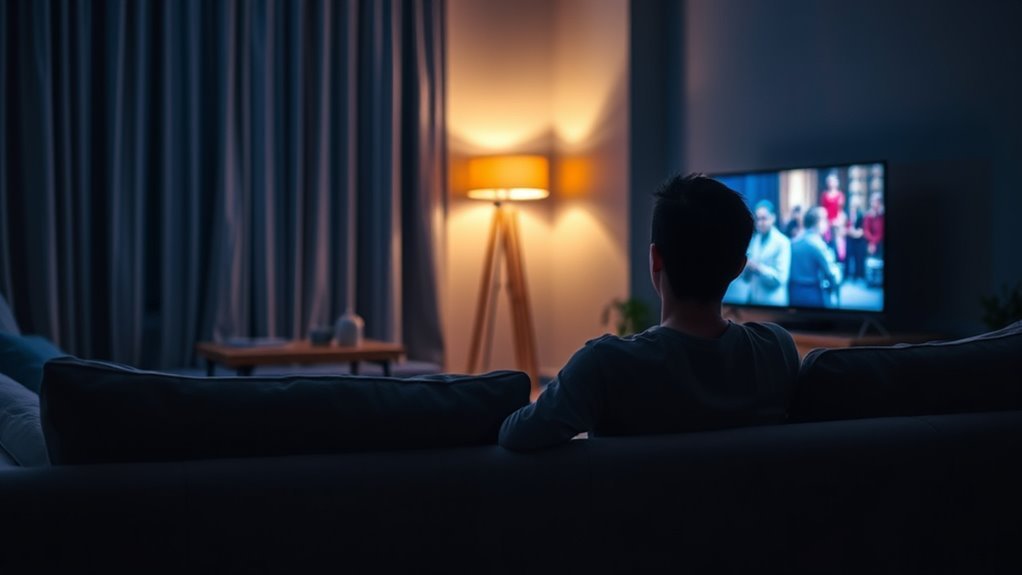
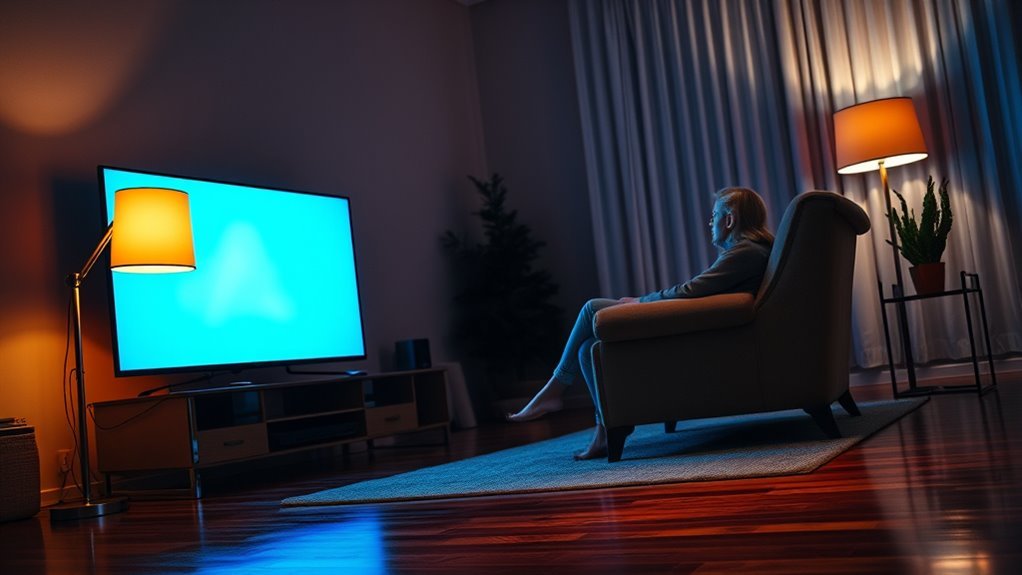
Although watching TV in the dark might seem relaxing, it forces your eyes to work harder to adjust between the bright screen and the surrounding darkness. Your pupils constantly dilate and contract, which tires the muscles controlling them.
The contrast between the bright screen and the dark room makes your eyes strain to focus, leading to discomfort. You might experience dryness, itchiness, or even headaches because your blinking rate decreases when you concentrate on a bright screen in a dark space.
Additionally, the blue light emitted from your TV can worsen eye fatigue by interfering with your natural sleep cycle. Over time, this strain can cause persistent discomfort and affect your vision clarity.
How Ambient Lighting Eases Eye Strain When Watching TV in the Dark
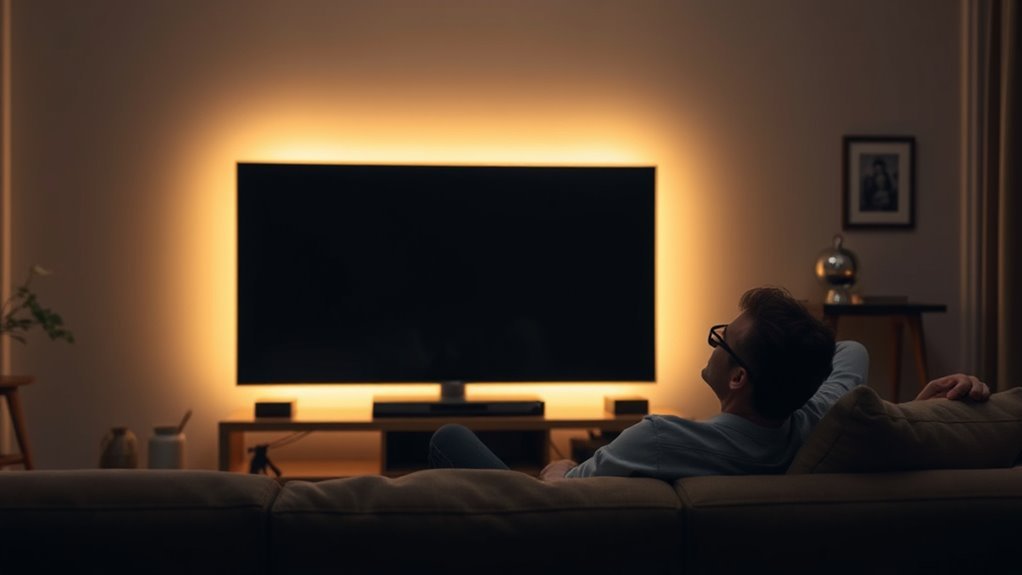
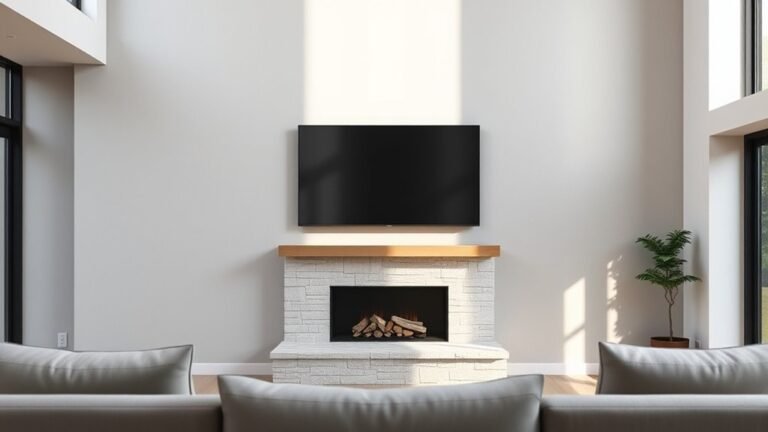
You can ease eye strain by adding ambient lighting behind your TV, also known as bias lighting. This reduces the harsh contrast between your bright screen and the dark room, making viewing more comfortable.
Placing the light correctly is key to getting the best effect without glare or distraction. It’s a simple trick that really makes a difference when you’re watching in the dark!
Benefits Of Bias Lighting
When watching TV in a dark room, your eyes work harder to adjust between the bright screen and the surrounding darkness, which can cause strain and discomfort. That’s where bias lighting comes in.
By placing a soft, indirect light behind your TV, you create a gentle glow that reduces the stark contrast your eyes face. This lighting helps your eyes relax, minimizing fatigue and headaches during long viewing sessions.
Bias lighting also enhances perceived picture quality by improving black levels and color contrast without washing out the screen. It’s an easy, energy-efficient way to protect your vision and boost your viewing experience.
You don’t need bright lights—just a subtle, warm tone that complements your screen’s brightness. It really makes a difference without being distracting.
Reducing Contrast For Comfort
Soft bias lighting sets the stage for a more comfortable viewing experience by reducing the harsh contrast between your TV screen and the dark room. When you watch TV in complete darkness, your eyes strain to adjust between the bright screen and pitch-black surroundings.
Adding gentle ambient light lessens this sharp difference, easing your eyes’ effort to refocus. This balance helps prevent headaches and fatigue, letting you enjoy longer viewing sessions without discomfort.
Optimal Light Placement
Although ambient lighting reduces eye strain, its effectiveness depends largely on where you place the lights. Position lights behind or around your TV to create a soft glow that balances the screen’s brightness.
Avoid direct light shining into your eyes or onto the screen, as this causes glare. Using adjustable lamps or bias lighting strips can help you customize the brightness and placement.
Here’s a quick guide on ideal light placement:
| Placement Area | Effect on Eyes | Tip |
|---|---|---|
| Behind TV | Reduces contrast strain | Use LED bias lighting |
| Side Walls | Softens room lighting | Use dimmable lamps |
| Ceiling | General ambient light | Use indirect fixtures |
| Behind Seating | Prevents shadows | Place low-intensity lamps |
| Floor Lamps | Adds warmth | Avoid harsh direct beams |
Screen Settings to Reduce Eye Strain While Watching TV in the Dark
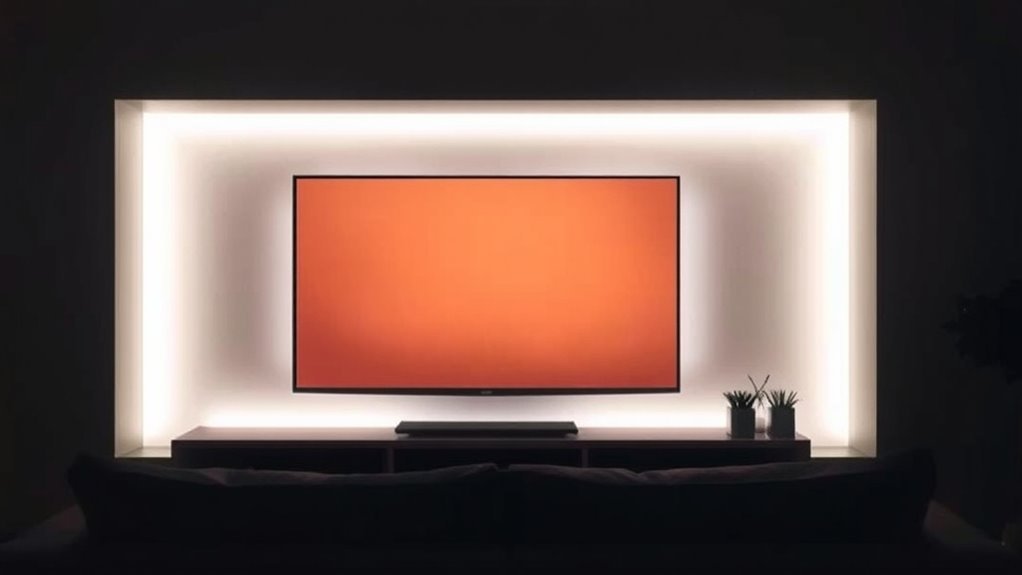
You’ll want to adjust your TV’s brightness to a comfortable level that’s not too harsh on your eyes in the dark. Lowering brightness and selecting a warmer color temperature can considerably reduce eye strain.
Let’s explore how tweaking these settings can make your viewing experience much easier on your eyes. It’s really about finding that sweet spot where the screen feels just right.
Adjust Brightness Levels
When watching TV in a dark room, adjusting the brightness levels on your screen can greatly reduce eye strain. If the screen is too bright, your eyes work harder to focus, causing discomfort.
Lower your TV’s brightness to a comfortable level where details remain clear but the light isn’t harsh. Avoid setting it too dim, as that makes your eyes strain to see.
Most modern TVs have preset modes like “Movie” or “Night” that automatically adjust brightness for darker environments—try these to find what suits you best.
You can also manually tweak the brightness in the settings menu to match your room’s darkness. By balancing brightness properly, you help your eyes relax and enjoy watching TV without unnecessary strain.
Optimize Color Temperature
Adjusting your TV’s brightness is a great start, but fine-tuning the color temperature can further ease eye strain in a dark room. Color temperature affects how warm or cool the screen looks. A warmer tone is gentler on your eyes when it’s dark.
Here’s what you can do:
- Set to Warm or Night Mode: Most TVs have a “Warm” or “Night” color setting—choose this to reduce harsh blue light.
- Manually Adjust RGB Levels: If available, lower the blue light by decreasing the blue channel and slightly increasing red and green for a balanced, soothing display.
- Use Blue Light Filters or Apps: Some TVs or external devices offer built-in blue light filters—activate these during nighttime viewing.
These tweaks help you watch comfortably without stressing your eyes. Give them a try and see how much easier it is on your eyes at night!
Best TV and Seating Positions to Avoid Eye Fatigue
Although watching TV in the dark can strain your eyes, choosing the right TV placement and seating position can substantially reduce fatigue.
Place your TV at eye level to avoid neck strain and keep it about 1.5 to 2.5 times the diagonal screen size away from your seating spot.
Sit at a slight angle to reduce glare and avoid staring directly into the screen for long periods.
| Position Aspect | Recommendation | Reason |
|---|---|---|
| TV Height | Eye level | Prevents neck and eye strain |
| Viewing Distance | 1.5-2.5x screen size | Reduces eye fatigue |
| Angle of Viewing | Slight off-center angle | Minimizes glare |
| Seating Comfort | Supportive chair | Maintains posture |
These adjustments really help keep your eyes comfortable, especially when you’re watching in a dark room.
Taking Breaks and Simple Habits to Protect Your Eyes
Since your eyes can get tired quickly during extended TV time, taking regular breaks is essential to keep them healthy. You don’t have to stop watching completely—just pause often to give your eyes a rest.
Taking regular breaks during extended TV time helps keep your eyes healthy without stopping your viewing entirely.
Here are some simple habits to protect your eyes:
- Follow the 20-20-20 rule: Every 20 minutes, look at something 20 feet away for 20 seconds to reduce strain.
- Blink frequently: Blinking keeps your eyes moist and prevents dryness, especially in a dark room.
- Keep room lighting soft: Use a dim light behind your TV to reduce contrast and ease your eyes.
Eye Exercises to Relieve Strain After Watching TV in the Dark
When your eyes feel tired after watching TV in the dark, performing simple eye exercises can quickly relieve strain and improve comfort. Try the 20-20-20 rule: every 20 minutes, look at something 20 feet away for 20 seconds to relax your eye muscles.
You can also do eye rolling—slowly roll your eyes in a circle five times clockwise, then five times counterclockwise. Another effective exercise is focusing: hold your finger a few inches from your face, focus on it, then shift your gaze to an object farther away.
Repeat this back and forth several times. These exercises boost circulation and reduce fatigue. Incorporate them regularly, especially after extended TV sessions in the dark, to keep your eyes refreshed and prevent discomfort.
Frequently Asked Questions
Can Watching TV in the Dark Affect My Sleep Quality?
Yes, watching TV in the dark can affect your sleep quality because the blue light disrupts melatonin production.
To protect your sleep, try dimming the screen or using blue light filters before bedtime.
It really makes a difference if you give your eyes a break from that harsh light.
Are Blue Light Glasses Effective for Watching TV in the Dark?
Blue light glasses do help reduce eye strain, but they won’t completely prevent discomfort if you watch TV in the dark.
You’ll still want to balance screen brightness and ambient light for the best eye comfort and sleep quality.
It’s all about finding that sweet spot that feels easy on your eyes.
Does Screen Size Impact Eye Strain When Watching in the Dark?
Yes, screen size impacts eye strain. Larger screens can reduce strain by letting you sit farther away, but too big or too close can worsen it.
Adjust your distance and brightness to keep your eyes comfortable in the dark.
It’s all about finding the right balance for your eyes. Don’t be afraid to move a bit or tweak settings until it feels just right.
Can Certain TV Shows or Genres Cause More Eye Strain?
Yes, fast-paced shows with lots of quick cuts or intense action can strain your eyes more. Bright, flashing scenes and dark, high-contrast visuals also increase eye fatigue.
Is It Safe for Children to Watch TV in the Dark?
It’s generally not safe for children to watch TV in the dark because their eyes can strain more easily.
You should use soft ambient lighting to reduce glare and help protect their developing eyesight while they watch.
This way, their eyes don’t have to work as hard. And it makes watching TV more comfortable overall.
Conclusion
Watching TV in the dark without hurting your eyes is like walking through a dim forest with a lantern. The right ambient light guides your path, and screen settings soften the glare like gentle moonlight. Good seating keeps you steady like a strong tree.
Taking breaks and doing eye exercises are your revitalizing streams, clearing strain away. By balancing these elements, you’ll enjoy your screen time comfortably, protecting your eyes like a careful traveler guarding precious treasure.
In short, to watch TV in the dark without bad effects on your eyes, make sure to have some ambient lighting around. Adjust your screen settings to reduce glare and brightness. Also, keep a good posture and take regular breaks with simple eye exercises. This balance helps reduce eye strain and keeps your vision healthy while you enjoy your favorite shows comfortably.