3 Key Factors That Determine How Heavy a 55 Inch TV Is
You’ll find that three key factors determine how heavy a 55-inch TV is: the build materials, screen technology, and design choices. These elements play a big role in the overall weight and feel of your TV.
Knowing what affects the weight can help you decide the best one for your space and needs.
Metal frames and bulky internal structures add weight, while plastic parts and slim profiles keep it lighter. OLED screens weigh less since they don’t need backlights, unlike LED or QLED models.
Plus, extra features like soundbars can increase bulk.
Understanding these factors helps you handle, mount, or move your TV with ease.
There’s more to explore on each aspect, so you can make a smart choice when picking out your 55-inch TV.
Key Takeaways
- Screen technology impacts weight, with OLED being lighter and LED/LCD models heavier due to backlighting components. It’s pretty interesting how the type of screen can make a difference.
- Build materials like metal frames add significant weight, while plastic or composite materials help reduce it. So, what the TV is made of really matters.
- Design choices, including slim profiles and minimalist stands, influence the overall mass and portability of the TV. Plus, internal structures and added features, such as built-in soundbars, contribute to increased bulk and weight.
- Mounting and handling considerations depend on understanding the TV’s weight range, aiding safe installation and transport. Knowing this can make your setup much easier and safer.
Average Weight of 55-Inch TVs: What to Expect
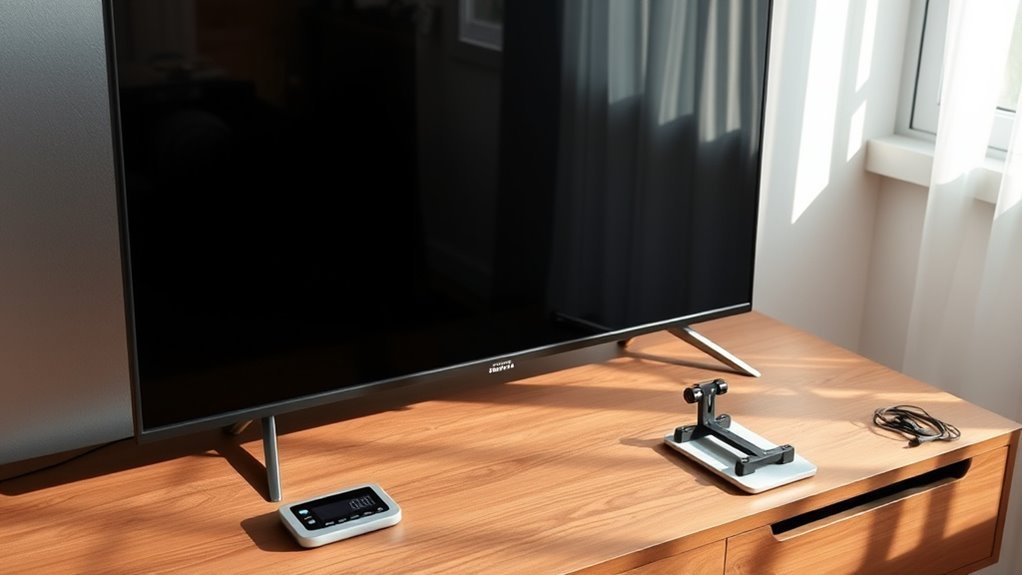
Wondering how much a 55-inch TV typically weighs? Most models fall between 30 to 50 pounds, making them manageable for most people to move or mount with some help.
The exact weight varies depending on the TV’s type and features, but this range gives you a solid expectation. If you plan to mount your TV on the wall or carry it around, knowing this helps you prepare adequately.
Keep in mind that newer LED and OLED TVs tend to be lighter compared to older LCD or plasma versions, but they still stay within this general weight bracket. Understanding this average weight lets you plan for installation and transportation without surprises or unnecessary strain.
How Build Materials and Design Affect 55-Inch TV Weight

Although the overall size of a 55-inch TV is fixed, the materials and design choices manufacturers use considerably impact its weight. When you pick a TV, you’ll notice models with metal frames tend to be heavier than those using plastic or composite materials.
Metal adds durability but also adds pounds. The internal structure matters too—some TVs have bulkier builds with extra reinforcement, while others prioritize slimness, which reduces weight.
Even the type of stand or mount design affects the total heft; a solid metal stand adds weight compared to a minimalist plastic base. So, when you’re evaluating a 55-inch TV, consider how build materials and design influence its portability and installation ease, especially if you plan to mount or move it frequently.
How Screen Technology and Features Influence 55-Inch TV Weight

Besides build materials and design, the screen technology and additional features you choose play a big part in how much a 55-inch TV weighs. OLED panels are lighter because they don’t need backlighting. On the other hand, LED/LCD TVs weigh more since they have those extra backlight layers.
Features like built-in soundbars or extra cooling systems can add some bulk too. So, if you want a sleek setup, it’s smart to think about how these things impact the overall weight.
| Screen Technology | Weight Impact |
|---|---|
| OLED | Lightweight |
| LED/LCD | Heavier |
| QLED | Moderate weight |
| Additional Features | Increase weight |
Knowing these differences makes it easier to pick a TV that fits your space without any hassle when mounting or moving.
Frequently Asked Questions
How Do I Safely Transport a Heavy 55-Inch TV?
You should unplug and remove all cables, and use a sturdy box or blanket for protection. Carry the TV upright with help to keep it safe.
Try to avoid twisting the TV while moving it. Also, make sure to secure it tightly in your vehicle so it doesn’t shift during transport. That way, your 55-inch TV stays safe and sound!
What Are the Best Wall Mounts for Heavy 55-Inch TVS?
You’ll want sturdy mounts like the VideoSecu ML531BE or Sanus VLT6, which hold your TV like a trusted friend’s strong arms.
They offer solid support, easy installation, and keep your heavy 55-inch TV secure and steady.
These mounts make sure your TV stays put, so you can just sit back and enjoy your favorite shows without worry.
Can a Heavy 55-Inch TV Affect My Electricity Bill?
Yes, a heavy 55-inch TV can slightly increase your electricity bill, especially if it has higher power consumption. You should check its wattage and usage time to manage energy costs effectively.
It’s all about how much power the TV uses and how long you keep it on. So, keeping an eye on those details can really help you keep your bills in check.
Are Heavier 55-Inch TVS More Durable Than Lighter Ones?
Oh sure, because weight alone makes your 55-inch TV a superhero!
But seriously, heavier doesn’t always mean tougher.
You shouldn’t assume durability just by heft; quality materials and build matter more than how much it weighs.
How Does TV Weight Impact Shipping Costs?
Heavier TVs usually cost you more to ship because carriers charge based on weight. You’ll also pay extra for special packaging or handling to protect your TV during transit,
which increases overall shipping expenses. It’s just how it works when you want to keep your TV safe on the move. So, the heavier the set, the more you might end up spending.
Conclusion
When choosing a 55-inch TV, remember that weight can vary widely—some models weigh as little as 25 pounds, while others tip the scale at over 50 pounds. You’ll want to take into account build materials, design, and screen technology since these factors directly impact how heavy your TV will be.
Knowing this helps you plan for mounting or moving it. It’s important to consider these aspects so you’re not caught off guard by a heavy or bulky TV.
Now, you’re ready to pick the perfect 55-inch TV that fits both your space and strength limits. By keeping these key factors in mind, you can find a TV that’s just right for your setup without any hassle. Understanding the weight variations makes choosing and handling your 55-inch TV way easier!