How Many Amps Does a TV Draw
Your TV usually draws between 0.5 and 2 amps, depending on its size and type.
Smaller models like 32-inch LED TVs use closer to 0.5–1 amp, while larger 55–65 inch sets may pull 1–2 amps.
OLED TVs tend to be more efficient, drawing less than 1.5 amps, whereas older plasma TVs can use 3–5 amps.
Factors like brightness and connected devices also affect usage.
Keep going, and you’ll find out how this impacts safety and your power bill.
Key Takeaways
- Most modern LED/LCD TVs draw between 0.5 and 2 amps depending on screen size.
- A 32-inch TV typically uses around 0.5 to 1 amp, while 55–65 inch models draw 1 to 2 amps.
- OLED TVs are more efficient, usually consuming under 1.5 amps.
- Older plasma TVs can draw much higher amps, ranging from 3 to 5 amps.
- You can estimate amps by dividing the TV’s wattage by the supply voltage (e.g., 180W ÷ 120V = 1.5 amps).
Typical TV Amps by Type and Size
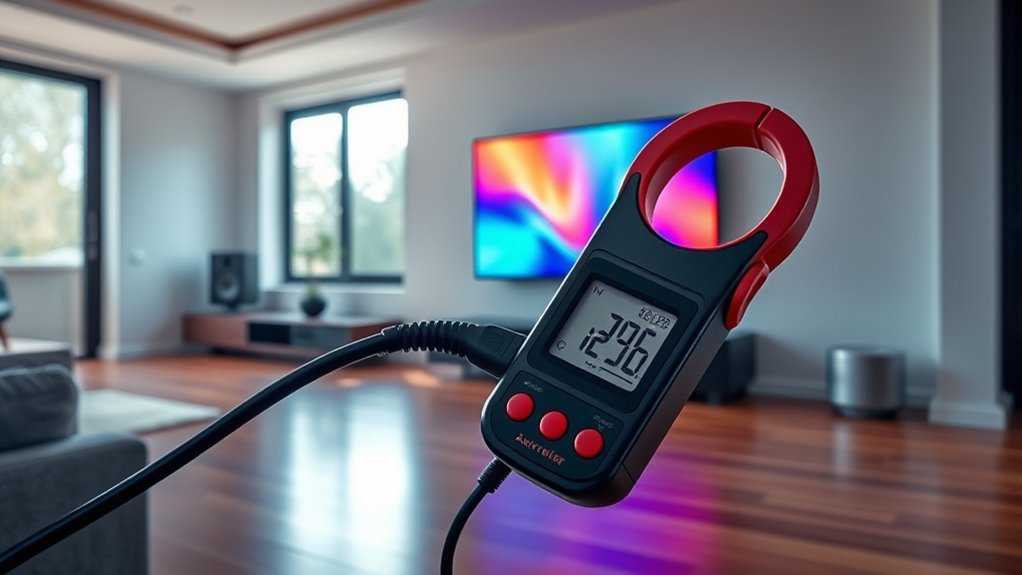
Although the exact amperage varies, you can expect most modern LED and LCD TVs to draw between 0.5 and 2 amps depending on their size. Smaller TVs, around 32 inches, usually pull closer to 0.5 to 1 amp, while larger models, such as 55 to 65 inches, can draw 1 to 2 amps.
Most modern LED and LCD TVs draw between 0.5 and 2 amps depending on their size.
OLED TVs tend to use slightly less power due to their efficient technology, often staying under 1.5 amps even in bigger sizes. That’s pretty handy if you’re looking to save a bit on energy.
Older plasma TVs, however, consume much more, sometimes upwards of 3 to 5 amps, because of their less efficient display method. So, if you still have one of those, it’s good to keep this in mind.
Understanding these typical ranges helps you gauge how much current your TV might require without needing complex calculations or specialized equipment. Makes it easier to figure out what you’re dealing with, right?
How to Calculate Your TV’s Amperage

Wondering how to figure out your TV’s amperage? Start by checking your TV’s power rating, usually listed in watts on the back label or in the user manual.
Once you have the wattage, divide it by your power supply voltage—typically 120 volts in the US or 230 volts in many other countries. For example, if your TV uses 180 watts and you’re in the US, divide 180 by 120, which gives you 1.5 amps.
This calculation assumes the voltage is stable and the TV is running at its typical power consumption. Remember, this method gives you an average amperage, helping you understand how much current your TV draws during normal use.
It’s a simple way to estimate the amps without specialized tools. Easy, right?
What Affects How Many Amps Your TV Uses?
Now that you know how to estimate your TV’s amperage based on its wattage and voltage, it’s important to understand that the actual current your TV uses can vary. Several factors influence this, including screen size, display technology, brightness settings, and additional features like soundbars or smart capabilities.
These variables change how much power your TV draws at any given time. So, it’s not always a fixed number — it can go up or down depending on what’s going on with your TV.
| Factor | Impact on Amperage |
|---|---|
| Screen Size | Larger screens draw more amps |
| Display Type | OLED vs. LED affects usage |
| Brightness Level | Higher brightness increases amps |
| Connected Devices | Extra devices add to current draw |
| Usage Mode | Gaming or streaming changes consumption |
Knowing these can help you better anticipate your TV’s power needs. It’s always good to keep them in mind when you’re figuring out your setup.
Why TV Amps Matter for Electrical Safety
Because your TV’s amperage directly affects how much current flows through your home’s wiring, understanding it is essential for electrical safety. If your TV draws more amps than the circuit can handle, it risks overheating wires, which could lead to electrical fires.
Understanding your TV’s amperage is crucial to prevent overheating wires and potential electrical fires.
Knowing your TV’s amp draw helps you avoid overloading outlets or extension cords. This prevents dangerous situations. It also guarantees your circuit breakers or fuses function properly, cutting power if the current gets too high.
Keep these safety tips in mind:
- Use outlets and circuits rated for your TV’s amps
- Avoid plugging multiple high-amp devices into one circuit
- Check and replace damaged cords to prevent shorts and sparks
How TV Amps Affect Your Electricity Bill
How much does your TV’s amp draw influence your electricity bill? The amps your TV pulls directly affect how much power it consumes. Higher amps mean more current flow, which translates to greater energy use and a higher cost on your monthly bill.
Even if a TV uses a small number of amps, leaving it on for hours daily can add up. Conversely, TVs with lower amp draws help minimize electricity consumption, saving you money over time.
Understanding your TV’s amp draw lets you anticipate its impact on your energy expenses. While it’s just one device, its usage contributes to your overall household electricity demand. So, being aware of the amps it draws helps you manage your bills more effectively.
Tips to Lower Your TV’s Amps and Power Use
Since your TV’s amp draw directly impacts your electricity bill, finding ways to reduce its power use can lead to noticeable savings. You don’t have to sacrifice your viewing experience to be more energy-efficient.
Simple adjustments can lower your TV’s amps and cut down power consumption effectively.
Here are some practical tips to help you out:
- Lower the brightness and contrast settings. Dimming your screen reduces power draw considerably without affecting picture quality too much.
- Use energy-saving modes. Many TVs come with eco or power-saving settings that optimize amp use.
- Turn off your TV completely when not in use. Avoid leaving it on standby, as it still draws power.
Frequently Asked Questions
Can a TV Cause Circuit Breakers to Trip?
Yes, your TV can trip circuit breakers if it has a faulty power supply or if it’s plugged into an overloaded circuit.
You should check for electrical issues or reduce the load to prevent frequent trips. It’s a good idea to make sure your wiring and outlets are in good shape, too.
Do Smart TVS Use More Amps Than Regular TVS?
Smart TVs usually draw slightly more amps than regular TVs because they run additional features like internet connectivity and apps.
However, the difference is minimal, so you probably won’t notice a big change in power usage. It’s not something that’ll make your electricity bill jump up significantly.
How Do Standby Modes Affect TV Amperage?
Standby modes reduce your TV’s amperage considerably, usually to under 0.5 amps. While it’s not zero, it’s minimal power use.
This helps save energy when your TV isn’t fully on but still ready to wake quickly. So, even though it’s drawing a little power, it’s much less than when the TV is in use.
Are LED TVS More Energy-Efficient Than OLED TVS?
Think of LED TVs as sprinters, using less energy in bursts, while OLEDs are marathoners, consuming more steadily.
You’ll find LED TVs generally more energy-efficient, but OLEDs offer richer colors and deeper blacks in exchange.
Can Using a Surge Protector Impact TV Amperage Draw?
Using a surge protector won’t change your TV’s amperage draw since it only safeguards against voltage spikes. It doesn’t affect how much power your TV consumes during normal operation, so your current stays the same.
Think of it like a shield for your electronics—it’s there to block sudden surges, not to mess with the regular flow of electricity. So, you can use a surge protector without worrying about it changing how much power your TV pulls.
Conclusion
So, now you know how many amps your TV pulls—probably less than your fridge, but more than your old radio. It’s funny how something that’s basically just a box of pixels can sneakily add to your electric bill and trip breakers if you’re not careful.
But hey, knowing this means you’re one step closer to being the electrical wizard of your home. Just don’t try to impress your friends by bragging about your TV’s amps!
Understanding how many amps a TV draws is useful for managing your home’s electrical load. It helps prevent breaker trips and gives you a clearer picture of your energy consumption. So next time you’re looking at your electric bill, you’ll know exactly how much your TV is contributing. That’s power knowledge you can actually use!