3 Ways Television Is Considered Literature and Taught in English Classes
You can consider television as literature because it uses literary techniques like symbolism, complex characters, and non-linear storytelling to craft rich narratives.
It also explores deep social themes such as identity, mental health, and social inequality, giving you meaningful material to analyze.
In English classes, you’ll often use TV shows to sharpen your critical thinking by questioning motives and connecting themes to real-world issues.
Keep going, and you’ll uncover even more ways TV enriches literary study.
Key Takeaways
- Television uses literary techniques like symbolism, foreshadowing, and complex characters to enrich storytelling. It’s very much like traditional literature in that way.
- English classes look at TV narratives through themes of identity, social issues, and human experiences. This helps students gain a deeper understanding of culture and society.
- Teachers encourage critical thinking by asking students to question motives, predict what might happen next, and evaluate how reliable the story is. It’s a great way to engage with TV shows on a deeper level.
- TV episodes act as rich texts for literary analysis. They highlight narrative structures and emotional storytelling, similar to novels and plays.
- Including television in literature education also boosts media literacy. It prepares students to interpret visual and thematic cues with a critical eye.
Literary Techniques in Television as Literature

Television shows use a variety of literary techniques that make them just as rich and complex as traditional literature. When you watch TV, you’ll notice how writers use symbolism, foreshadowing, and irony to deepen the story.
You’ll see complex character development unfold over multiple episodes or seasons, just like in a novel. Dialogue isn’t just casual talk; it reveals motives and themes.
You’ll also find narrative structures like flashbacks or non-linear timelines that keep you engaged and thinking critically. By paying attention to these techniques, you’ll understand how television creators craft meaning and evoke emotions.
This approach helps you appreciate TV not just as entertainment but as a sophisticated form of storytelling that deserves analysis in English classes.
Key Themes and Social Issues Explored in Television as Literature
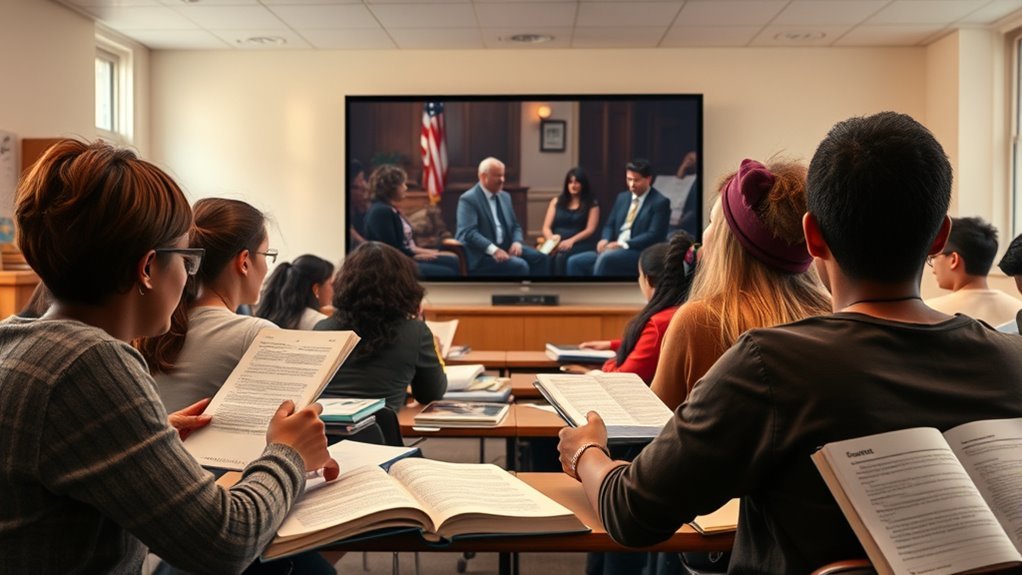
As you recognize the layered storytelling techniques in TV shows, you’ll also notice how they tackle important themes and social issues that resonate with viewers. Television as literature often explores complex human experiences, reflecting society’s challenges and sparking dialogue.
Layered storytelling in TV reveals deep themes that reflect society and inspire meaningful conversation.
When you analyze these shows, you encounter themes that deepen your understanding of culture and identity. It’s pretty fascinating how much depth is packed into what we watch.
Consider these key themes and social issues commonly explored:
- Race and Identity: Examining systemic racism and personal identity struggles.
- Mental Health: Portraying psychological challenges with nuance and empathy.
- Gender and Sexuality: Challenging norms and highlighting diverse experiences.
- Social Inequality: Addressing poverty, class, and power dynamics.
Using Television as Literature to Develop Critical Thinking in the Classroom
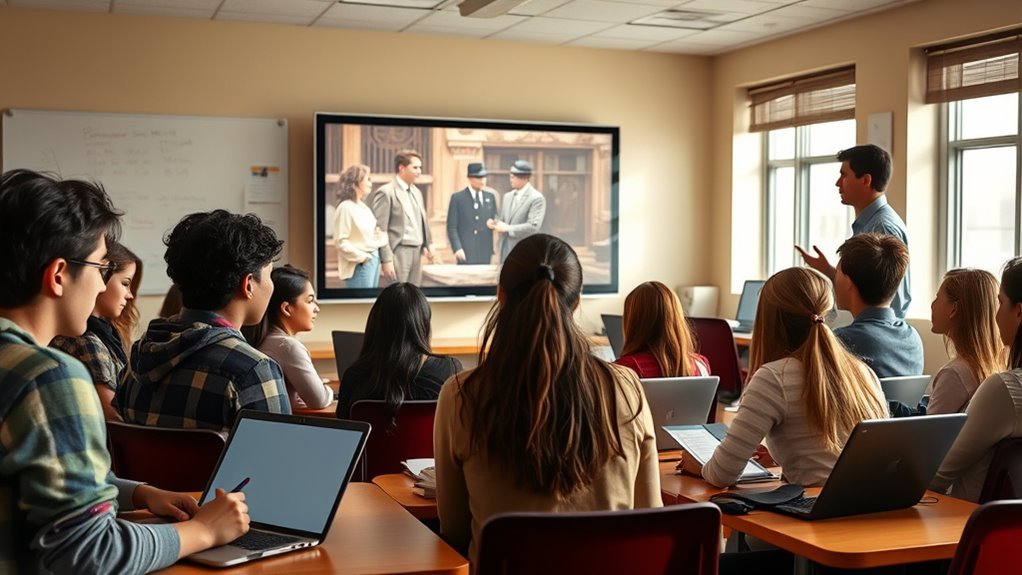
How can you use television to sharpen critical thinking skills in your classroom? Start by selecting shows that challenge students to analyze complex characters and plotlines. Encourage them to question motives, predict outcomes, and identify biases within episodes.
Use guided discussions to compare themes with those in traditional literature, fostering deeper understanding. Assign projects that require evaluating the narrative’s reliability or the portrayal of social issues.
You can also prompt students to critique production choices, like dialogue or cinematography, and how these affect storytelling. By treating television as a rich text, you push students to think beyond passive viewing.
This active engagement develops their analytical skills, preparing them to interpret various media critically and thoughtfully in an increasingly visual world.
Frequently Asked Questions
How Do Teachers Select TV Shows for English Curriculum?
You choose TV shows that offer rich storytelling, complex characters, and relevant themes.
You also consider age-appropriateness, cultural significance, and how well the content aligns with your learning objectives and curriculum standards.
Are There Specific Genres of TV Best Suited for Literature Classes?
You’ll find drama and mystery genres best suited for literature classes since they offer complex characters and intricate plots. These shows help you analyze themes, narrative techniques, and character development effectively.
They really enrich your literary understanding. Plus, diving into these genres makes discussing stories way more interesting and engaging.
What Are the Challenges of Grading Tv-Based Assignments?
You’ll struggle grading TV assignments since 60% of students interpret scenes differently. You can’t rely on one “correct” answer, so you’ll have to create flexible rubrics.
Focus on critical thinking, not just content recall. It’s all about understanding their perspectives and reasoning. That way, grading becomes more about their analysis than just right or wrong answers.
How Do Students Generally Respond to TV as Literature?
You’ll find students generally respond positively to TV as literature because it’s relatable and engaging. They appreciate the visual storytelling, though some might initially struggle to analyze it as deeply as traditional texts.
That said, once they get the hang of it, many start to see the layers and complexities just like they would in a novel or play. It becomes easier to discuss characters, themes, and narrative techniques as they watch more closely.
Can Watching TV Replace Traditional Reading Assignments?
You can’t fully replace traditional reading assignments with TV because reading develops critical thinking and imagination differently.
However, TV can complement reading by engaging you visually and providing diverse storytelling experiences.
It’s all about balance—using both gives you the best of both worlds.
Conclusion
When you immerse yourself in television as literature, you open a world where stories leap off the screen with the power of a thousand novels. You’ll see how literary techniques and social themes invite you to think deeper and challenge your views.
Using TV in your English class doesn’t just make learning fun—it transforms your critical thinking skills into a superpower.
So, embrace television as literature and watch your understanding soar beyond the stars! By recognizing TV shows as a form of literature, you tap into rich narratives filled with complex characters and meaningful themes. This approach not only enhances your appreciation for storytelling but also sharpens your ability to analyze and interpret various texts. In English classes, television becomes a dynamic tool that bridges entertainment and education, making literary concepts more relatable and accessible. Ultimately, treating television as literature deepens your engagement and broadens your perspective, proving it’s a powerful medium for learning and critical thinking.