How Do I Dispose of a Flat Screen TV in 5 Easy Steps
To dispose of your flat screen TV in five easy steps, start by checking if it powers on and erase all your personal data using a factory reset. This is important to keep your information safe before getting rid of the TV.
Next, look into local recycling centers or donation options like schools and nonprofits that might need your old TV.
Then, safely prepare your TV by unplugging all cables and wrapping it securely for transport. This helps avoid any damage while moving it.
After that, use certified e-waste services to make sure hazardous parts are handled properly and don’t harm the environment.
Finally, recycle the components to protect the planet and reduce waste.
Keep reading to uncover detailed tips and guidelines that make TV disposal simple and eco-friendly!
Key Takeaways
- Reset the TV to factory settings and remove all personal data before disposal.
- Contact local recycling centers or e-waste programs to find proper disposal options.
- Safely unplug and pack the TV in original packaging or protective wrap for transport.
- Use certified e-waste recyclers to ensure environmentally safe handling of hazardous materials.
- Remove batteries and cords, and recycle components separately to protect the environment.
Assess Your Flat Screen TV and Wipe Personal Data
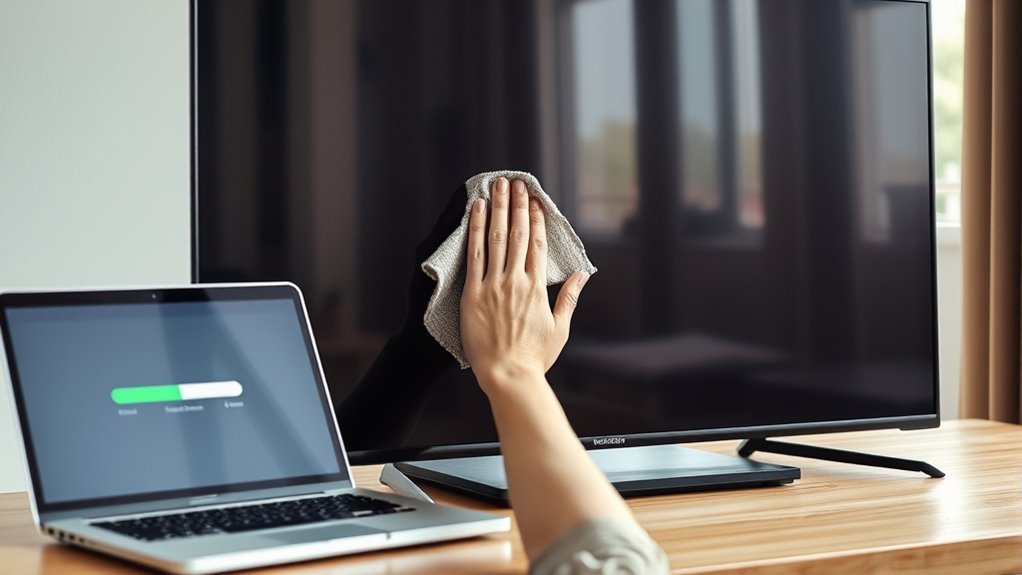
Before you dispose of your flat screen TV, it’s important to assess its condition and wipe any personal data stored on it. Start by checking if the TV powers on and if the screen is intact.
If it’s still functional, consider whether you want to sell, donate, or recycle it. Next, navigate to your TV’s settings menu and look for options like “Reset” or “Factory Reset.”
This step removes personal data such as app logins, saved passwords, and viewing history. If you’ve connected external devices, unplug them to avoid confusion.
Don’t forget to remove any memory cards or USB drives. Taking these steps guarantees your personal information stays secure and prepares your TV for safe disposal or repurposing.
Explore Local Recycling and Donation Options for Flat Screen TVs
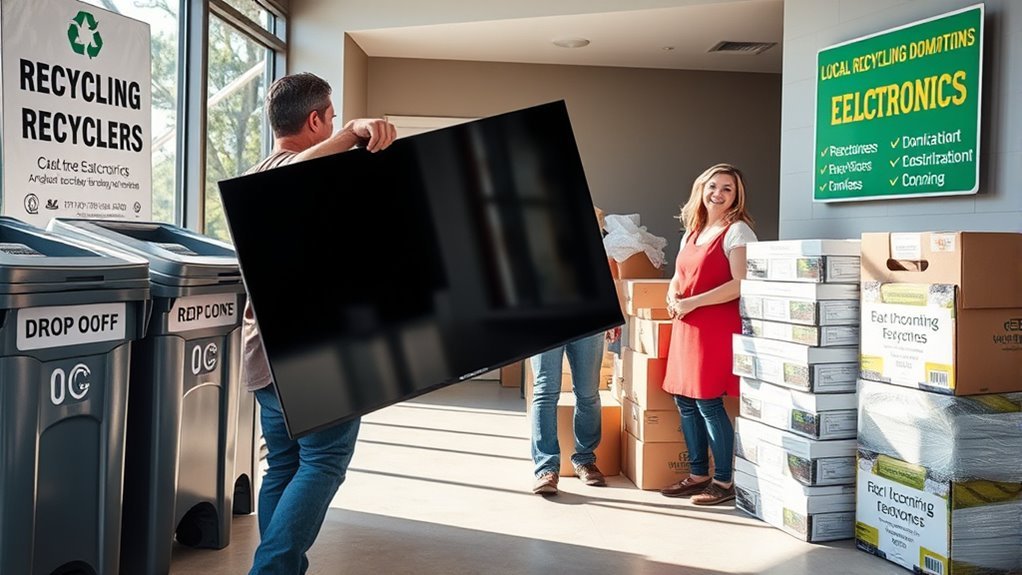
Once you’ve wiped your TV clean and unplugged all accessories, the next step is to find the best way to dispose of it responsibly. Start by checking with your local waste management or recycling centers—they often accept flat screen TVs for recycling.
After wiping and unplugging your TV, check local recycling centers for responsible disposal options.
Many cities hold special electronic waste collection events where you can drop off your TV safely. If your TV still works, consider donating it to schools, nonprofit organizations, or community centers that might benefit from it.
Websites like Freecycle or local Facebook groups are also great places to offer your TV for free to someone in need. Exploring these options helps reduce environmental harm and extends your TV’s life.
Always verify any facility’s policies and fees before dropping off your flat screen TV. You don’t want any surprises!
Prepare Your TV Safely for Transport or Drop-Off
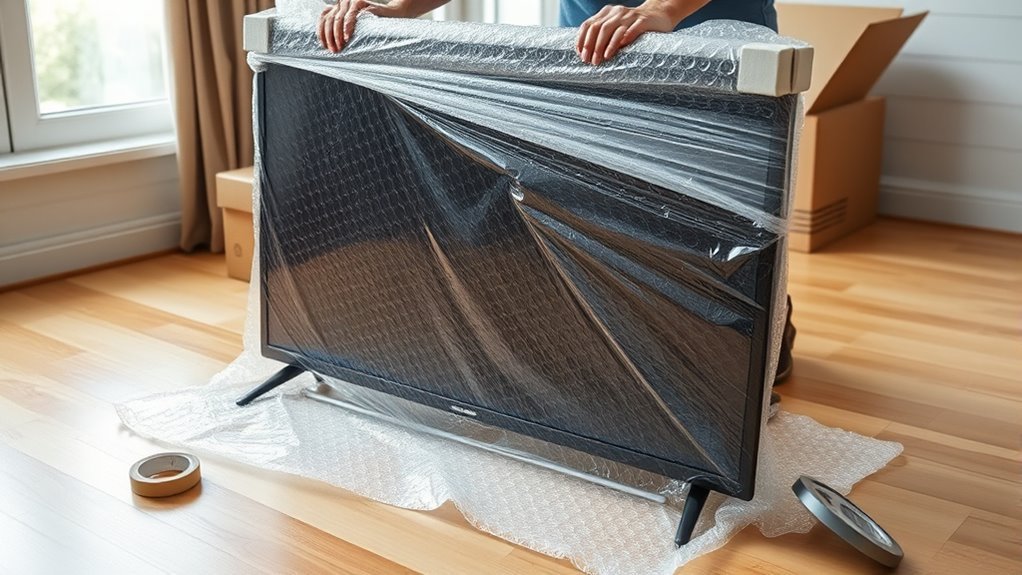
How should you get your flat screen TV ready for transport or drop-off? First, unplug all cables and accessories.
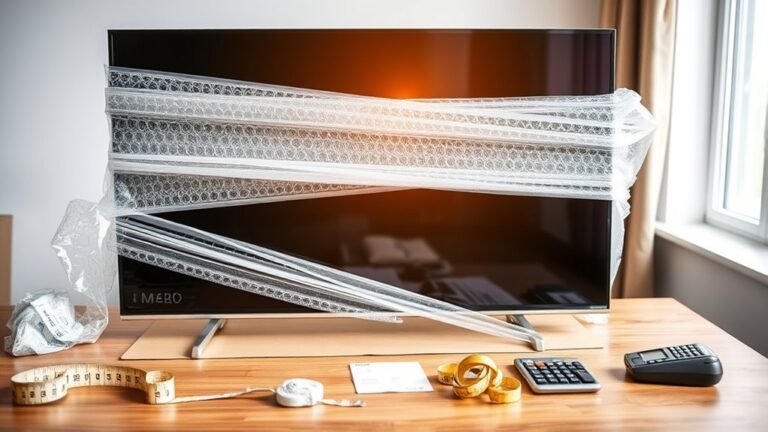
If you have the original box, use it—it’s the best option. If not, wrap the TV in a blanket or bubble wrap to protect the screen.
Make sure to secure the TV upright and avoid laying it flat to prevent damage. Also, label the package clearly for easy identification.
Here’s a quick guide:
| Step | Action | Tip |
|---|---|---|
| 1. Disconnect | Unplug all cables | Keep cables together |
| 2. Protect | Wrap TV in bubble wrap/blanket | Use foam corners if possible |
| 3. Pack | Place TV upright in box | Avoid laying flat |
| 4. Secure | Tape box securely | Reinforce corners |
| 5. Label | Mark contents and fragile | Use bright markers |
Use Professional E-Waste Services for Flat Screen TVs
After preparing your flat screen TV safely for transport, the next step is to find a reliable way to dispose of it responsibly. Using professional e-waste services is a smart choice because these experts handle electronics safely and comply with environmental regulations.
You can locate certified e-waste recyclers or collection centers in your area through local government websites or trusted e-waste organizations. Many services offer convenient drop-off points or even pick-up options, saving you time and effort.
By choosing professional e-waste services, you guarantee hazardous materials inside the TV don’t harm the environment. Plus, these services often refurbish or recycle components properly, keeping toxic substances out of landfills.
Recycle Flat Screen TV Components to Protect the Environment
Although it might seem easier to toss your flat screen TV in the trash, recycling its components plays a crucial role in protecting the environment. Your TV contains valuable materials like glass, metals, and plastics that can be reused.
Recycling your flat screen TV recovers valuable materials and helps protect the environment from harmful waste.
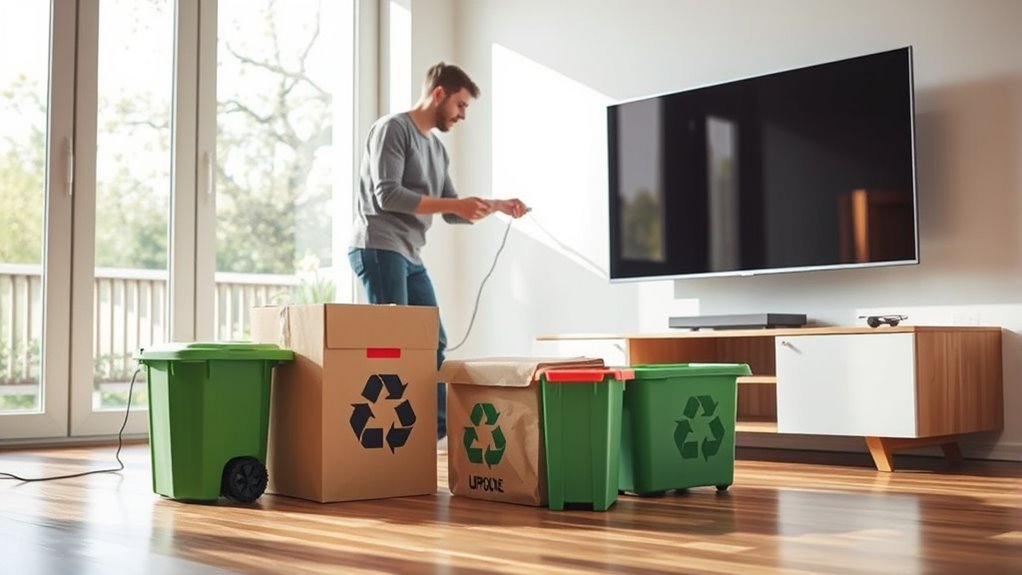
When you recycle, you help reduce landfill waste and prevent harmful chemicals from polluting soil and water. Start by removing batteries and cords, then separate parts if possible.
Many recycling centers accept flat screen TVs and safely process hazardous elements like mercury and lead. By choosing to recycle, you conserve natural resources and support a cleaner planet.
Don’t just discard your old TV — take a few steps to recycle it properly and make a positive environmental impact. It’s easier than you think!
Frequently Asked Questions
Can I Sell My Flat Screen TV Instead of Disposing of It?
Yes, you can sell your flat screen TV if it’s in good condition. Use online marketplaces or local buy-and-sell groups.
Selling helps you make some money and keeps the TV out of landfills. It’s a win-win for you and the environment!
How Do I Safely Remove a Broken Flat Screen TV From the Wall?
You’ll want to unplug the TV first, then carefully unscrew the mounting brackets while having someone support its weight.
Avoid bending or twisting the screen to prevent further damage or injury during removal. It’s best to take your time with this part.
Are There Any Fees Associated With Flat Screen TV Recycling?
Recycling your flat screen TV might come with a small “environmental contribution” fee, depending on location. Some places offer free drop-offs, while others charge to cover safe disposal.
It really varies, so it’s a good idea to check local programs for exact details. That way, you’ll know what to expect before you go.
Can I Donate a Flat Screen TV That Has a Cracked Screen?
You usually can’t donate a flat screen TV with a cracked screen because it’s considered damaged and unsafe.
Instead, check with local recycling centers or e-waste programs that accept broken electronics for proper disposal.
They’ll handle it the right way and keep harmful materials out of landfills.
What Should I Do if My TV Has a Warranty Still Active?
If your TV’s warranty is still active, you should contact the manufacturer or retailer first. They’ll guide you on repair or replacement options, so you don’t waste money or effort on disposal before exploring those benefits.
It’s always better to check with them before trying anything on your own. You might get your TV fixed or even replaced without extra cost. So, don’t skip this step!
Conclusion
Disposing of your flat screen TV is like passing a well-loved book to the next reader—by wiping your data, exploring recycling or donation, and safely preparing it, you guarantee its story continues responsibly.
Using professional e-waste services and recycling components is the final chapter, protecting our environment’s pages for future generations.
So, take these steps confidently, knowing you’re not just discarding a device, but crafting a legacy of care and sustainability. Proper flat screen TV disposal is key to reducing electronic waste and conserving resources.
By recycling or donating your TV, you help keep harmful materials out of landfills and support a greener planet. Remember, responsible disposal means making a positive impact on the environment and setting a great example for others.