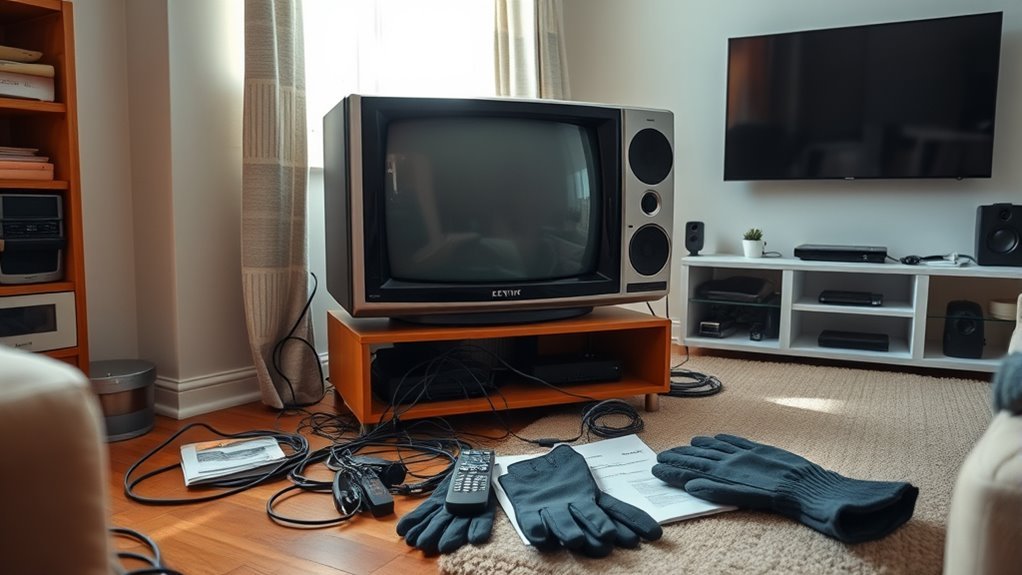
How Do I Get Rid of My Old Television in 7 Quick Steps
To get rid of your old television in seven quick steps, start by deciding if you want to donate or sell it. Make sure your TV is in good condition before you move forward with either option.
Next, list it on online marketplaces or see if the manufacturer offers take-back programs. These options can help you find a new home for your TV quickly and easily.
You can also look for local recycling centers or community e-waste events where you can drop off your TV responsibly. This way, you’re helping the environment by disposing of your old electronics properly.
Before handing it over, prepare your TV by unplugging it, cleaning it, and resetting it to factory settings. This ensures your personal information stays safe.
And remember, never dump your TV illegally—doing so can lead to fines and harm the environment. Keep following these steps to uncover the best tips and detailed options to get rid of your old television hassle-free!
Key Takeaways
- Donate or sell the TV if it works. You can target charities or online marketplaces with clear photos and honest descriptions. This way, someone else can get good use out of it.
- Check manufacturer or retailer take-back programs. They often offer trade-ins or recycling options that make the process easier for you.
- Locate local recycling centers or e-waste collection events. Many of these accept TVs for responsible disposal, so you’re doing the right thing.
- Prepare the TV before handing it over. Unplug it, remove any accessories, give it a good clean, and if it’s a smart TV, perform a factory reset.
- Avoid illegal dumping at all costs. Using authorized recycling services helps protect the environment and keeps you on the right side of the law.
Can You Donate or Sell Your Old TV?
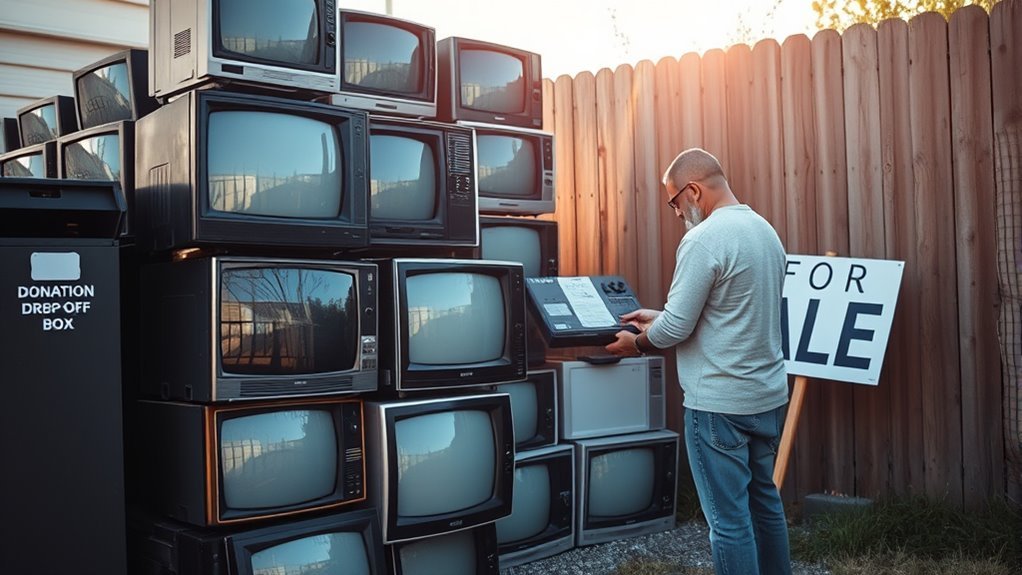
You can often donate or sell your old TV if it’s still in good working condition. Many local charities, schools, or community centers accept functioning TVs to support their programs.
Consider donating or selling your old TV if it’s in good working condition to benefit local organizations.
Before donating, check their guidelines to verify your TV meets their requirements. Selling your TV is another great option, especially if it’s relatively modern.
You can attract buyers by highlighting its features and condition. However, older or bulky models might have limited appeal, so be realistic about its value.
Regardless of whether you choose to donate or sell, make sure to clean your TV and remove any personal settings. Taking these steps helps you responsibly part with your device while benefiting others or making a bit of money.
How to Sell or Give Away Your TV Online
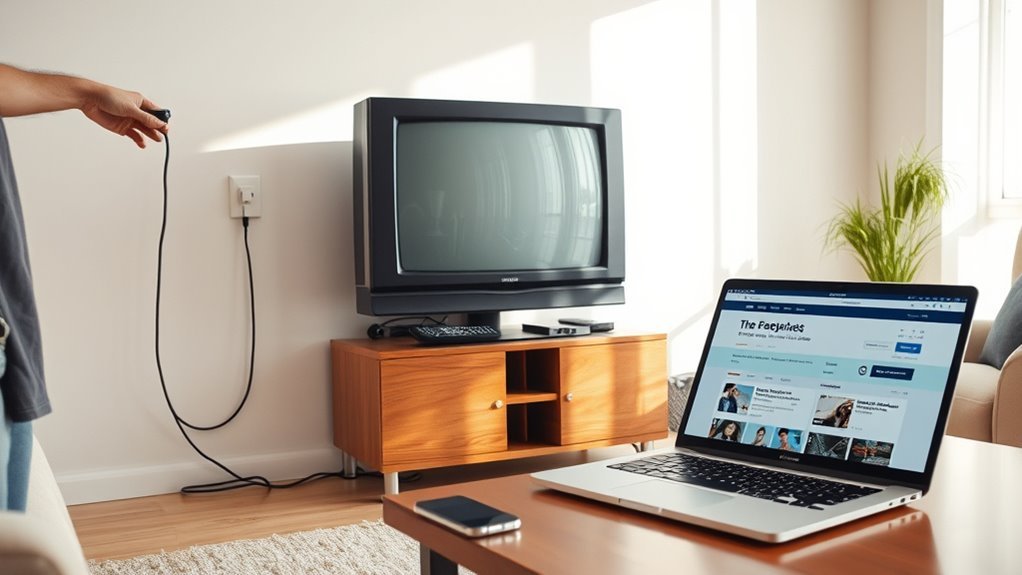
You can use popular platforms like Facebook Marketplace, Craigslist, or OfferUp to sell or give away your TV quickly. Make sure to include clear photos and detailed descriptions to attract buyers or recipients.
Always arrange safe meeting spots and verify payment before handing over your TV. It’s better to be safe than sorry!
Best Platforms To Use
When looking to sell or give away your old television, choosing the right platform can make all the difference in how quickly and easily it finds a new home. Start with popular online marketplaces like Facebook Marketplace and Craigslist—they connect you with local buyers and offer quick transactions.
If you want a broader audience, try eBay, where you can auction your TV or set a fixed price. For giving it away, apps like Nextdoor and Freecycle are excellent for reaching neighbors interested in free items.
Additionally, specialized platforms like OfferUp combine ease of use with local reach. Pick the platform that matches your goal—whether selling fast or finding someone who truly needs it—and make your TV disappear without hassle.
Tips For Safe Transactions
Although selling or giving away your TV online can be super convenient, taking some precautions really helps guarantee a smooth and safe transaction. Start by meeting buyers in public, well-lit places during the day.
It’s best to avoid inviting strangers to your home until you feel comfortable. Always communicate through the platform’s messaging system so you have a record of your interactions.
Be clear and honest about your TV’s condition to prevent any disputes later on. When accepting payment, try to go with secure methods like PayPal or cash; avoid checks or wire transfers.
If you’re shipping the TV, use a tracked service and make sure to share the tracking number with the buyer. Trust your instincts—if something feels off, don’t hesitate to decline the deal.
Staying cautious not only keeps you safe but also helps ensure your TV finds a good new home.
How to Use Manufacturer or Retailer Take-Back Programs
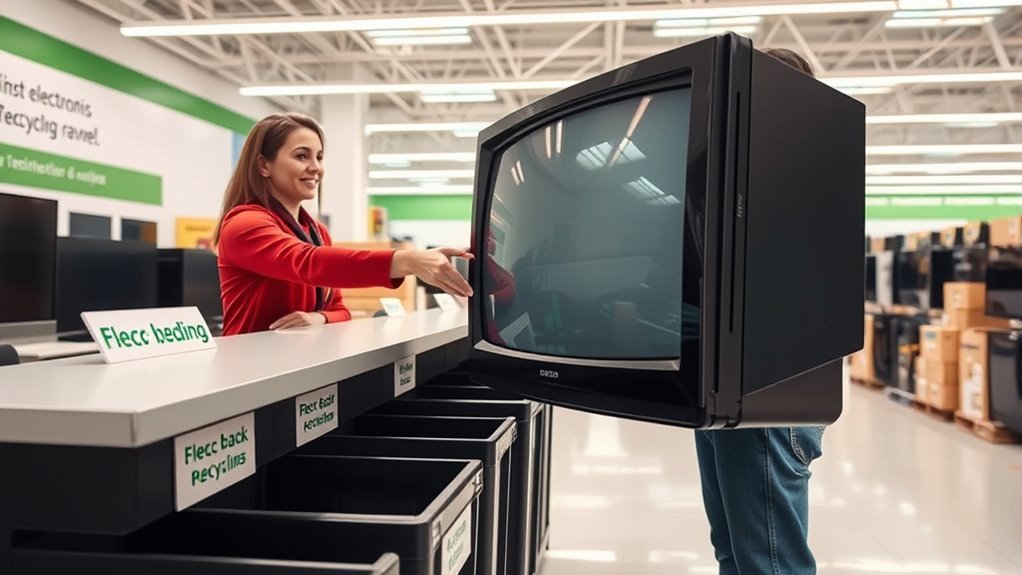
Since many manufacturers and retailers offer take-back programs, disposing of your old television can be simpler than you might think. Start by checking the brand’s website or the retailer where you bought your TV to see if they provide a take-back option.
Disposing of your old TV is easier than you think—check the manufacturer or retailer for take-back programs.
These programs often allow you to return your old TV either in-store or by mail. Some retailers may offer discounts or credits toward a new purchase when you trade in your old unit.
Before you bring your TV in, make sure to back up any settings and disconnect all cables. Also, confirm if there are any fees or size restrictions.
Using these programs guarantees your TV is recycled or disposed of responsibly. It saves you time and helps reduce environmental impact.
Find Local TV Recycling Centers Near You
Finding local TV recycling centers near you is easier than you might expect, with many communities offering convenient drop-off locations. Start by checking your city or county’s official website for a list of authorized e-waste recyclers.
You can also use online tools like Earth911 or the EPA’s search tool to locate nearby facilities that accept old televisions. When you find a center, confirm their accepted TV types, hours, and any fees involved.
Drop-off centers often guarantee your TV is handled responsibly, preventing hazardous materials from harming the environment. By choosing a local recycling center, you save time and support sustainable disposal practices.
Don’t forget to remove any accessories or batteries before dropping off your television. This way, you’ll safely and efficiently recycle your old TV.
Join Community E-Waste Collection Events
Many communities host e-waste collection events throughout the year, giving you a convenient way to dispose of your old television responsibly. These events are often free and designed to keep hazardous materials out of landfills.
You can find them through your city’s website, local environmental groups, or social media pages. When you participate, you not only guarantee safe recycling but also support community efforts to reduce electronic waste.
Plus, these events often accept other electronics, so you can clear out more than just your TV. Keep an eye out for scheduled dates and any specific drop-off instructions to make the process smooth.
Taking part in these events helps protect the environment and promotes sustainable disposal practices in your neighborhood. It’s a simple way to make a big difference!
How to Prepare Your TV for Recycling or Donation
After locating a convenient e-waste collection event or donation center, you’ll want to get your TV ready for drop-off. Start by unplugging your TV and removing all cables, remotes, and accessories.
If you plan to donate, clean the screen and exterior to guarantee it looks presentable. Also, check if your TV has any personal data stored, especially if it’s a smart TV, and perform a factory reset to protect your privacy.
Next, gather any original packaging or protective materials to prevent damage during transport. Label your TV if required by the donation center.
Finally, confirm the drop-off times and any specific instructions the center provides. Preparing your TV properly helps assure it can be safely recycled or enjoyed by its next owner.
Why You Should Never Dump Your TV and How to Dispose of It Legally
Because televisions contain hazardous materials like lead and mercury, you shouldn’t just toss them in the trash. Dumping your TV illegally can harm the environment and may result in hefty fines.
Televisions contain hazardous materials, so never toss them in the trash to avoid environmental harm and fines.
These toxins can leach into soil and water, posing health risks to people and wildlife. So, it’s really important to handle your old TV the right way.
Instead, dispose of your TV through authorized recycling centers or special e-waste collection events. Many communities offer free drop-off locations specifically designed to handle electronic waste safely.
You can also check with local retailers or manufacturers who may have take-back programs. By following legal disposal methods, you protect the environment and comply with laws designed to manage hazardous materials responsibly.
Taking these steps guarantees your old TV won’t cause harm and supports sustainable recycling efforts. It’s a simple way to do your part for the planet!
Frequently Asked Questions
Can I Repurpose My Old TV Into a Digital Photo Frame?
Yes, you can repurpose your old TV into a digital photo frame by connecting a media player or USB drive with your photos. Just set it to slideshow mode, and you’ll enjoy your memories on the big screen.
It’s a simple way to give your old TV a new life. Plus, who doesn’t love seeing their favorite moments in a bigger format?
What Are the Environmental Hazards of Old TV Components?
Old TVs hide toxic ghosts like lead, mercury, and cadmium inside their hearts. When you toss them carelessly, these poisons leak, harming Earth’s soul.
You’ve got to recycle them properly to protect our shared home. It’s really about keeping our planet safe and healthy for everyone.
How Do I Safely Remove the Screen for a DIY Project?
You’ll want to unplug the TV, carefully remove the back panel, and disconnect cables. Use gloves and eye protection to handle the screen safely, as it can be fragile and contain hazardous materials.
Work slowly. It’s better to take your time than risk damage or injury. If you’re unsure about any step, don’t hesitate to look up a tutorial or ask someone experienced for help.
Are There Any Tax Benefits for Donating an Old TV?
Yes, you can get tax benefits by donating your old TV to a qualified charity. Just make sure to get a receipt and keep your records in order.
It’s a good idea to consult a tax professional to maximize your deduction and ensure you’re following IRS guidelines properly. This way, you’ll get the most out of your donation.
Can Old TVS Interfere With Wi-Fi or Other Electronics?
Old TVs can act like static storms, causing interference with your Wi-Fi and nearby electronics. You’ll notice slower connections or flickering screens.
It’s a real pain, right? To avoid this electronic chaos disrupting your signal, keep them unplugged or away from routers.
Conclusion
Getting rid of your old TV is like clearing out a cluttered room—making space for something new and brighter. By donating, selling, or recycling it properly, you’re not just letting go of an old device; you’re giving it a second life and protecting the planet.
Remember, each responsible step you take turns that outdated screen into a symbol of care and renewal. So, don’t just toss it—choose a path that’s smart and kind. Properly disposing of your old television helps reduce electronic waste and supports environmental sustainability. Whether you decide to recycle, donate, or sell, your action contributes to a cleaner, greener world.
In the end, getting rid of your old TV responsibly is easy and rewarding. It’s about making a positive impact while freeing up space in your home. So follow these steps and be part of the solution, not the pollution!