How Long Are TV Commercials Typically?
TV commercials typically last between 15 and 60 seconds. This range gives you a quick burst of brand highlights or a chance to hear a detailed story. These short ads are designed to capture your attention fast and effectively.
Shorter 15-second spots grab your attention quickly, making a fast impression. Meanwhile, 30-second ads balance clarity and impact perfectly. They offer just enough time to deliver a clear message without losing your interest.
Longer 60-second commercials let advertisers build an emotional connection with you. Networks vary ad lengths based on timing and audience to keep you engaged. Keep going, and you’ll discover why these choices matter so much.
Key Takeaways
- TV commercials typically last between 15 and 60 seconds, fitting into standard time slots for scheduling. Short commercials around 15 seconds deliver quick, memorable brand messages.
- Thirty-second ads balance clarity and impact, often used for product features. Longer commercials, up to 60 seconds, allow detailed storytelling and emotional connection.
- Less common commercial lengths include 20- and 45-second spots for specific programming needs. These are usually tailored to fit unique scheduling or creative goals.
Typical TV Commercial Lengths
Although TV commercials come in various lengths, most typically last between 15 and 60 seconds. When you watch TV, you’ll notice that these ads fit neatly into specific time slots, making it easier for networks to schedule programming.
You’ll find that some commercials are brief, around 15 seconds, delivering quick, punchy messages. Others take a bit more time, up to 60 seconds, allowing for a more detailed story or demonstration.
You might also see 20- and 45-second spots, but those are less common. The length often depends on the advertiser’s goals and budget, as longer ads cost more to air.
Understanding these typical lengths helps you appreciate how advertisers balance message clarity with viewer attention spans. It’s pretty interesting when you think about how much strategy goes into just the length of a commercial!
Differences Between 15-, 30-, and 60-Second TV Commercials
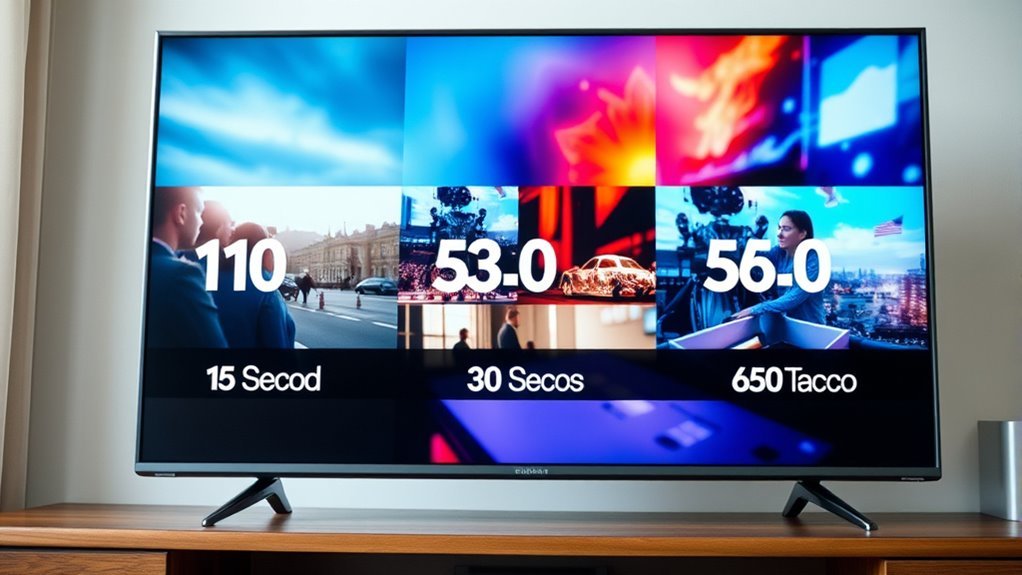
When you consider the typical lengths of TV commercials, it’s clear that 15-, 30-, and 60-second spots each serve different purposes and deliver messages in unique ways. You’ll notice shorter ads grab attention quickly, while longer ones build a story.
| Length | Purpose | Best Use Case |
|---|---|---|
| 15 seconds | Quick, memorable highlights | Brand awareness bursts |
| 30 seconds | Balanced message and impact | Product features |
| 60 seconds | Detailed storytelling | Emotional connection |
Choosing the right length depends on your goal. If you want to spark interest fast, go for 15 seconds. For clear information without rushing, 30 seconds work well.
And if you want to engage viewers deeply, 60 seconds let you do that effectively.
Why TV Commercial Lengths Vary by Network and Time of Day?
You’ll notice that commercial lengths change depending on the network and time of day because each channel tailors its ads to fit its programming style. Networks consider when their audience is watching and what content is on to decide how long commercials should run.
Understanding these patterns helps you see why some ads feel shorter or longer at different times. It’s all about matching the ads to the viewers and the shows they’re watching. Makes sense, right?
Network Programming Strategies
Since networks aim to maximize both viewer engagement and advertising revenue, they adjust commercial lengths based on the time of day and the type of programming. When you watch prime-time shows, you’ll notice more frequent and slightly longer commercials because networks capitalize on higher viewership.
In contrast, daytime or late-night slots often feature shorter or fewer ads to keep viewers from tuning out. Networks also tailor commercial breaks to match the pacing of their shows. For example, fast-paced dramas might have shorter breaks to maintain momentum, while sitcoms allow longer pauses.
You’ll find that networks strategically balance ad load with program content to keep viewers hooked while maximizing ad sales. This way, they ensure both their audience and advertisers stay satisfied.
Audience Viewing Patterns
Why do TV commercial lengths change depending on the network and time of day? It all comes down to audience viewing patterns. Networks analyze when and how viewers watch TV to decide commercial duration.
During prime time, when more people tune in, commercials tend to be shorter but more frequent. This keeps viewers engaged without overwhelming them.
Late-night or off-peak hours often feature longer ads since the audience is smaller and more targeted. You’ll notice kids’ channels have shorter commercials during cartoons to maintain their attention spans.
Networks also consider viewer patience and whether people are likely to stay through ads or switch channels. By tailoring commercial lengths to these patterns, networks maximize ad effectiveness and keep you watching longer.
How Commercial Length Affects Viewer Attention
Although longer commercials can provide more information, they often struggle to keep your attention throughout. Your focus tends to wane during extended ads, making it harder to absorb the message.
Shorter commercials, usually 15 to 30 seconds, deliver quick, impactful content that’s easier for you to remember. When ads are brief, you’re less likely to become distracted or switch channels.
However, if a longer commercial is engaging and well-paced, it can hold your interest better. Still, advertisers risk losing you if the message drags or feels repetitive.
Ultimately, the length affects how much you retain and how receptive you are. So, commercials that respect your attention span tend to be more effective at delivering their message.
How Advertisers Decide on Commercial Length
When deciding on commercial length, you have to balance budget constraints with how long your audience will stay engaged. You also need to follow the advertising standards set by each platform.
These factors shape the perfect timing for your message. So, it’s really about finding that sweet spot between what you can afford and what keeps people interested.
Budget Constraints Impact
Because producing longer commercials demands more resources, advertisers often have to balance their creative goals with budget limitations. When you plan a TV commercial, you’ll quickly realize that extending the length means higher costs—think more filming time, actors, editing, and airtime fees.
You might want a 60-second spot to tell a detailed story, but your budget may only allow for a 15- or 30-second commercial. This forces you to prioritize your message’s core elements, trimming anything that’s non-essential.
Additionally, different time slots come with varying price tags, so you’ll have to choose commercial lengths that fit your financial plan without sacrificing impact. In short, budget constraints guide how long your commercial can realistically be while still achieving your marketing goals.
Audience Attention Span
Since viewers often have limited attention spans, advertisers must carefully choose commercial lengths that capture interest quickly and hold it just long enough to deliver their message.
You’ll notice most commercials last between 15 to 30 seconds because that timeframe balances attention and information. If a commercial drags on, you’re likely to tune out or switch channels.
Advertisers test different lengths to see what keeps you engaged without overwhelming you. They focus on clear, compelling storytelling that fits within your attention window.
Platform Advertising Standards
Advertisers don’t just rely on attention spans to set commercial lengths—they also follow specific platform standards that shape how long ads can run. Each TV network or streaming service has its own rules about ad duration and frequency.
For example, traditional broadcast channels often stick to 15- or 30-second spots, while streaming platforms may allow shorter or more flexible formats. You’ll find that premium networks limit commercial time to preserve viewer experience, which pushes advertisers to keep their messages concise.
Plus, regulatory policies sometimes dictate maximum ad lengths to prevent viewer fatigue. So, when planning your commercial, you’ve got to consider these standards to make sure your ad fits the platform’s requirements.
That way, your message effectively reaches your audience without being cut or skipped.
Trends Shaping the Future of TV Commercials
Many factors are transforming how TV commercials look and feel, and these trends will shape their future in exciting ways. You’ll notice commercials becoming shorter and more engaging, as advertisers focus on capturing your attention quickly.
TV commercials are evolving to be shorter and more captivating, grabbing your attention instantly.
Interactive ads that let you respond or shop directly from your screen are growing, making your viewing experience more dynamic. It’s a cool way to get involved rather than just watching passively.
Personalized commercials, tailored to your preferences using data and AI, will become more common, so ads feel relevant rather than intrusive. Plus, streaming platforms are pushing for ad formats that blend seamlessly with content, keeping you engaged without disruption.
As technology evolves, you can expect TV commercials to be smarter, more targeted, and designed to fit your viewing habits better than ever before. It’s all about making ads work for you, not the other way around.
Frequently Asked Questions
How Much Does Producing a TV Commercial Typically Cost?
Producing a TV commercial typically costs between $5,000 and $100,000 or more, depending on factors like production quality, talent, and location.
You can keep costs lower by simplifying your concept and using local resources. It’s all about balancing what you want with what fits your budget.
What Regulations Govern TV Commercial Content?
You might be surprised to learn that the FCC, FTC, and local laws strictly regulate TV commercial content. They guarantee ads aren’t deceptive, offensive, or misleading.
This helps protect you from false claims and inappropriate material. So, it’s all about keeping things honest and safe.
Stay alert!
How Do TV Commercials Impact Brand Recall?
You’ll find TV commercials boost brand recall by creating memorable visuals and catchy messages. When done right, they stick in your mind, helping you recognize and choose that brand later.
This is especially true with repeated exposure. The more you see the ad, the more familiar the brand becomes. It’s like the brand gets a little spot in your memory, ready to pop up when you’re making a choice.
Can Viewers Skip TV Commercials Legally?
You can’t legally skip live TV commercials, but you can fast-forward or skip ads on DVRs and streaming platforms where allowed.
Just make sure to always follow the service’s terms to avoid breaking any rules while enjoying your shows. It’s all about staying on the right side of things while getting the best viewing experience.
How Do Digital Ads Compare to TV Commercials in Effectiveness?
You might think digital ads don’t match TV’s impact, but they often outperform by targeting you precisely and allowing interaction.
You’ll find digital ads more measurable and adaptable, making them highly effective in today’s fast-paced world.
They can change on the fly and reach the right audience at the right time.
That kind of flexibility? TV commercials just can’t compete with it.
Conclusion
Now that you know TV commercials usually last 15, 30, or 60 seconds, you can see why choosing the right length matters. For example, a 15-second ad by a snack brand during a morning show grabbed attention without losing viewers, boosting sales quickly.
So, next time you watch TV, notice how commercial length shapes your experience. Advertisers pick lengths that fit their message and your viewing habits. Understanding typical TV commercial lengths helps you see why some ads feel quick and catchy, while others dive deeper into a story. It’s all about matching the ad duration to the audience and platform for the best impact.