Sync Aquos TV Sound With Yamaha Receiver in 3 Easy Steps
To sync your Aquos TV sound with your Yamaha receiver in three easy steps, start by connecting both devices using an HDMI cable through their ARC-labeled ports. This ensures a smooth audio connection between your TV and receiver.
Next, set your TV’s audio output to HDMI ARC and disable its internal speakers. After that, select the corresponding HDMI input on your Yamaha receiver. This will help direct the sound properly to your receiver for better audio quality.
Finally, fine-tune the audio delay or lip-sync settings if you notice any lag between the picture and sound. This quick adjustment can make a big difference in your viewing experience.
Keep going to uncover tips for flawless audio and quick troubleshooting advice.
Key Takeaways
- Connect the TV and Yamaha receiver using a high-speed HDMI cable via their HDMI ARC ports.
- Set Aquos TV audio output to HDMI ARC and disable internal TV speakers to avoid duplication.
- Select the HDMI input linked to the TV on the Yamaha receiver and adjust sound settings accordingly.
- Match the TV’s audio format (bitstream or PCM) to the receiver’s supported formats for compatibility.
- If audio is out of sync, adjust the lip-sync or audio delay settings on both devices.
Connect Your Aquos TV to Your Yamaha Receiver Using HDMI ARC
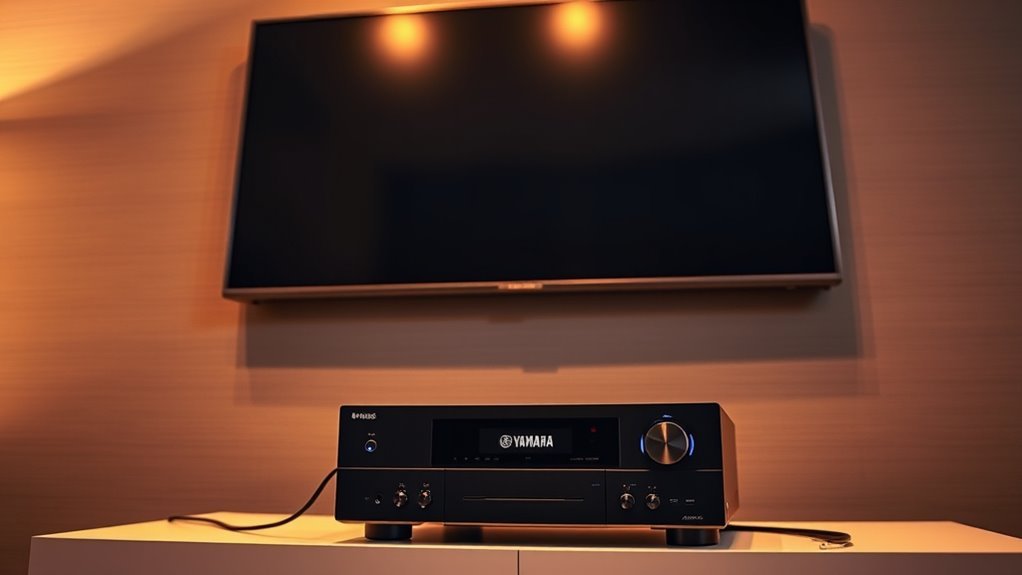
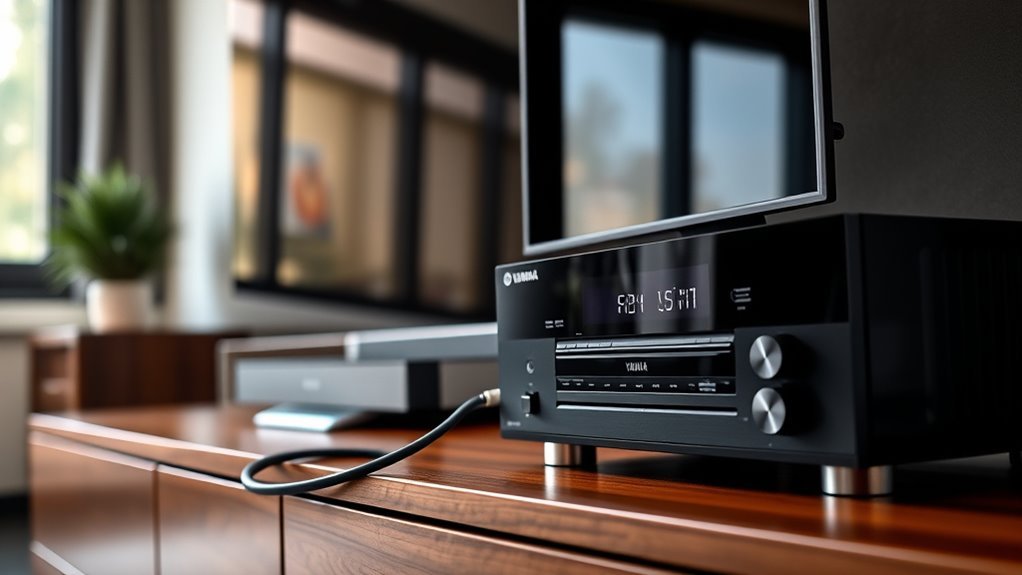
Before you can enjoy enhanced sound, you’ll need to connect your Aquos TV to your Yamaha receiver using an HDMI ARC cable. Start by locating the HDMI ARC port on both devices; it’s usually labeled “ARC” on the HDMI input.
To get enhanced sound, connect your Aquos TV to your Yamaha receiver via the HDMI ARC port.
Grab a high-speed HDMI cable that supports ARC and plug one end into the TV’s HDMI ARC port. Then, connect the other end to the HDMI ARC port on your Yamaha receiver. This single cable handles both audio and control signals, simplifying your setup.
Make sure both devices are powered on during connection. Avoid using standard HDMI ports, as they won’t transmit audio back to the receiver.
Once connected, you’re ready to move on to configuring your settings for ideal sound quality. Easy, right?
Configure Audio Settings on Your Aquos TV and Yamaha Receiver
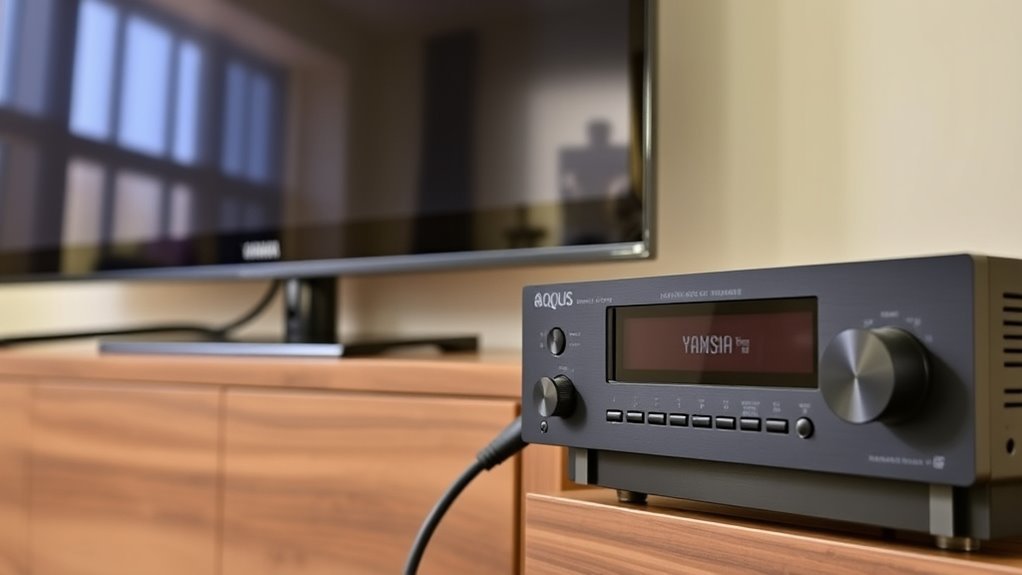
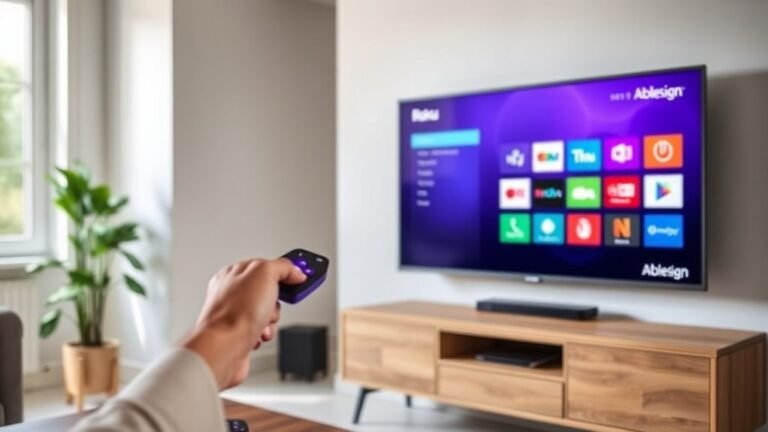
Once you’ve connected your Aquos TV to your Yamaha receiver, you’ll need to adjust the audio settings on both devices to guarantee seamless sound synchronization and ideal performance. Start by accessing your Aquos TV’s audio menu. Set the TV’s sound output to HDMI ARC or external speakers, and disable its internal speakers to avoid audio duplication.
Next, enable the “Audio Return Channel” option if it’s available. On your Yamaha receiver, select the correct HDMI input linked to your TV. Adjust the receiver’s audio settings to match your speaker setup—choose the appropriate sound field and enable any necessary processing like Dolby or DTS.
Finally, set the TV’s audio format to bitstream or PCM depending on your receiver’s compatibility. This will ensure crisp and clear sound from your system. Easy, right? Just a few tweaks and you’re all set!
Troubleshoot Sync Issues Between Aquos TV and Yamaha Receiver
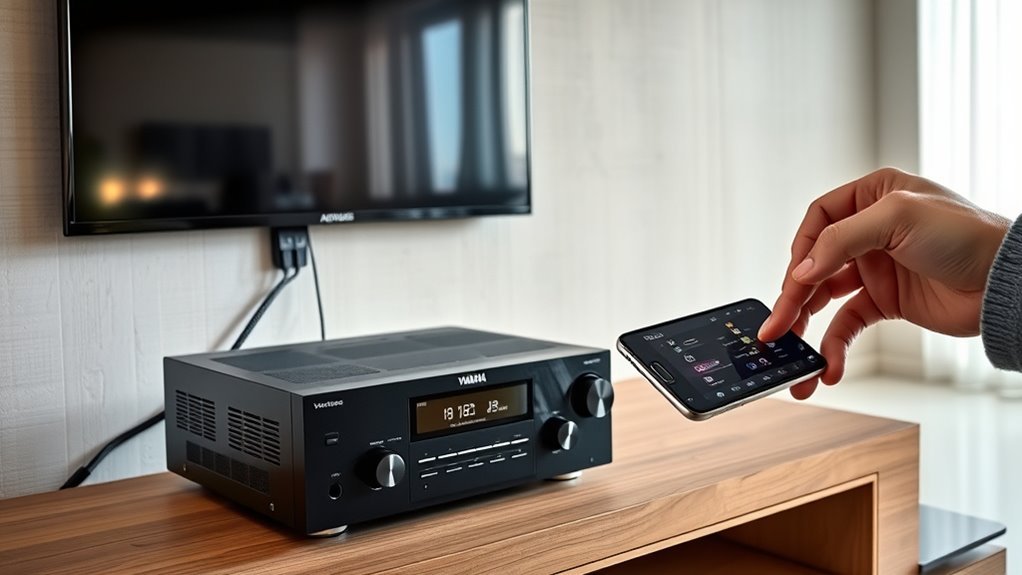
If you notice a lag between the picture on your Aquos TV and the sound from your Yamaha receiver, don’t worry—it’s a common issue that can usually be fixed quickly. First, check your HDMI cables to confirm they’re firmly connected and support ARC or eARC, as poor connections cause sync problems.
Next, look for an audio delay or lip-sync setting on both devices; adjusting these can align sound and picture perfectly. Also, try powering off both your TV and receiver, then turning them back on to reset their connection.
If you’re using an external device like a streaming box, verify its settings don’t add delay. Finally, updating the firmware on both your Aquos TV and Yamaha receiver can resolve compatibility glitches causing sync issues.
Frequently Asked Questions
Can I Use Optical Cable Instead of HDMI ARC for Audio Sync?
Yes, you can use an optical cable instead of HDMI ARC for audio sync, but you might face slight delays or lip-sync issues.
HDMI ARC typically offers better synchronization and control, so optical is a decent alternative but not perfect. It gets the job done, just with a few compromises here and there.
Does the Yamaha Receiver Support Dolby Atmos With Aquos TV?
Yes, your Yamaha receiver supports Dolby Atmos if both the receiver and Aquos TV output the Atmos signal via HDMI or compatible connections.
Just guarantee your TV’s settings enable Atmos passthrough for proper sound delivery. That way, you’ll get the full surround sound experience without any hiccups.
How Do Firmware Updates Affect Audio Sync Between Devices?
Firmware updates can be the missing puzzle piece for your audio sync issues. They often fix bugs and improve timing between devices, so you’ll notice smoother sound alignment and fewer delays once you install the latest version.
It’s pretty straightforward—updating your firmware helps your devices talk to each other better. This means less hassle with lag and a more seamless listening experience overall.
Can I Control TV Volume With Yamaha Receiver Remote?
You can control your TV volume with the Yamaha receiver remote if your setup supports HDMI-CEC or if you program the remote using the TV’s remote code.
Otherwise, volume control usually stays separate between devices. So, it really depends on how everything is connected and set up.
Will Bluetooth Audio Cause Sync Delays With the TV?
Funny enough, yes, Bluetooth audio can cause sync delays with your TV. You’ll probably notice a slight lag between picture and sound.
Conclusion
Congrats, you’ve just mastered syncing your Aquos TV with your Yamaha receiver—because who doesn’t love juggling HDMI cables and menu settings like a tech ninja?
If your sound still lags behind your picture, don’t panic; it’s just your devices testing your patience. Follow these three steps, and you’ll be enjoying perfectly synced audio faster than you can say “Why won’t this work?”
Now sit back, relax, and let the harmonious chaos begin! With these easy tips, syncing your Aquos TV sound with your Yamaha receiver has never been smoother. Say goodbye to audio delays and hello to seamless entertainment every time you hit play.