How Do You Safely Dispose of a Tube TV in 10 Easy Steps?
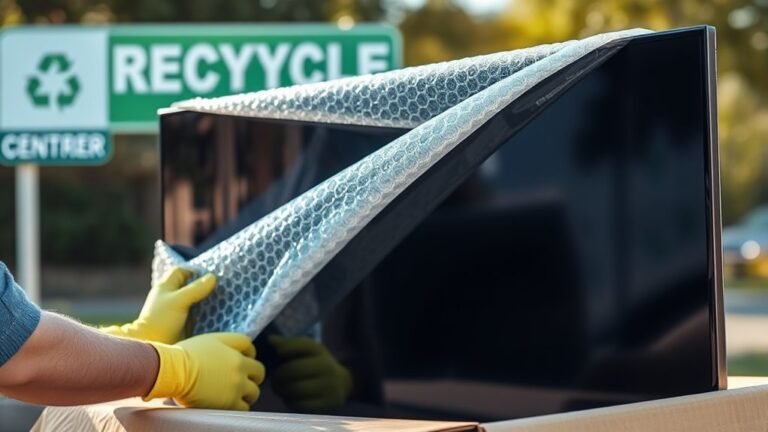
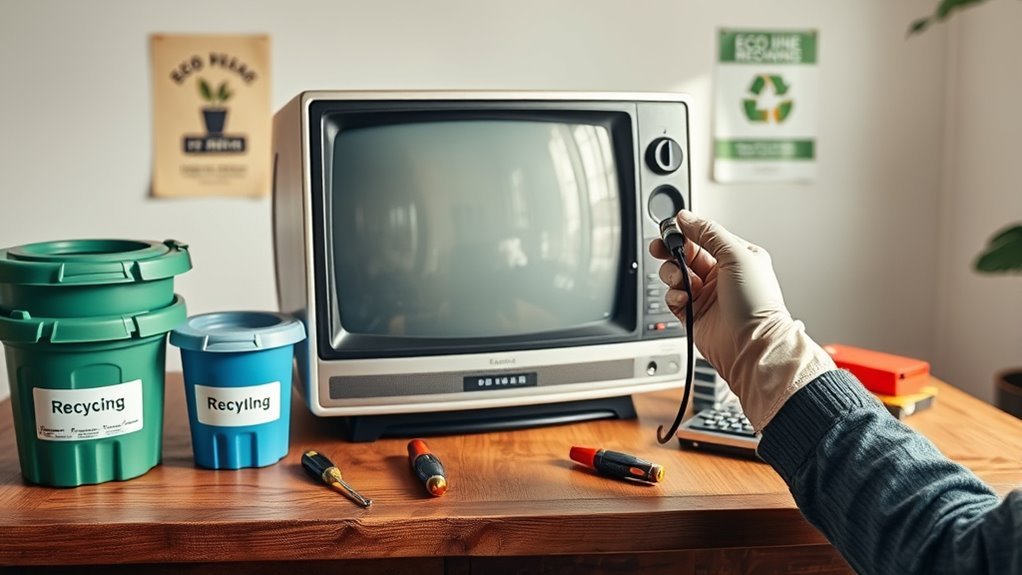
To safely dispose of your tube TV, start by unplugging it and waiting for any residual power to drain. Handling it carefully is key—secure any loose parts with tape or bubble wrap to avoid damage during transport.
Remember, tube TVs contain hazardous materials like lead and mercury, so tossing them in the trash is a big no-no. Instead, look for a certified e-waste recycler or use a pickup service that specializes in electronic waste.
When you’re ready to move your TV, transport it securely to prevent any accidents. If your tube TV still works, consider deleting personal data and donating it to someone who might need it.
Keep reading to discover the full step-by-step process for safe and responsible disposal of your tube TV. It’s easier than you think!
Key Takeaways
- Unplug the tube TV and carefully wrap it with bubble wrap or blankets. This helps protect the fragile parts during handling and transport.
- Next, locate certified e-waste recycling centers or manufacturer take-back programs. These are great for safe and legal disposal options.
- Secure any loose cables, accessories, and detachable parts. Use twist ties, tape, or bubble wrap to keep everything together and minimize damage or hazards.
- Then, schedule and confirm professional pickup or drop-off appointments. Make sure you’re following local disposal regulations and aware of any fees.
- Remember, never toss the TV in the regular trash. It contains hazardous materials that need proper recycling to avoid environmental harm.
Why You Should Never Trash Your Tube TV: Local Disposal Rules
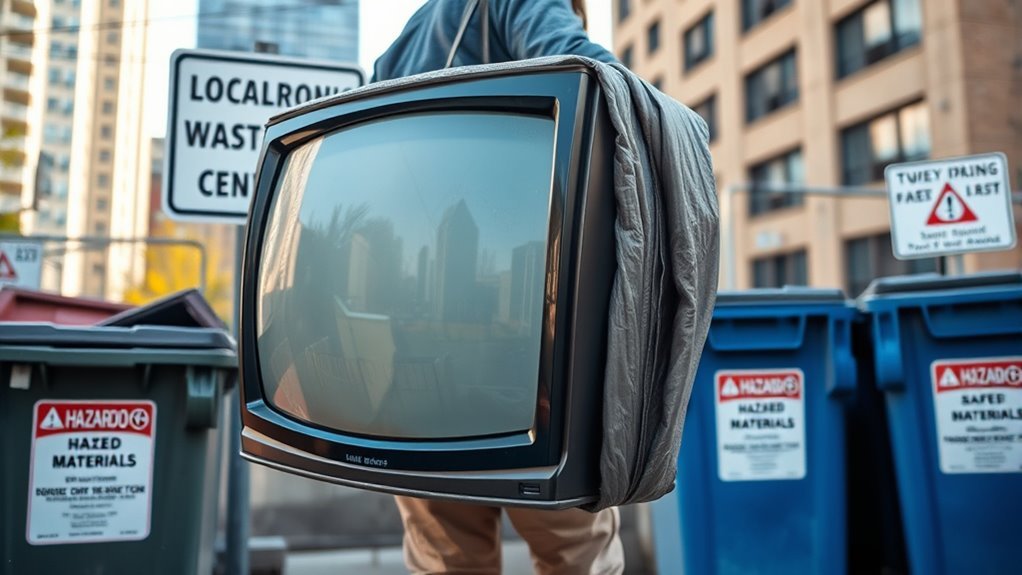
Because tube TVs contain hazardous materials like lead and phosphors, you should never simply toss them in the trash. Many local governments have strict rules about disposing of electronics due to environmental and health risks.
If you throw a tube TV in regular garbage, it could end up in a landfill where harmful substances may leak and contaminate soil and water. Plus, many cities and states require you to recycle or drop off these devices at designated facilities.
Ignoring these laws can lead to fines or penalties. To avoid trouble and protect the environment, check your area’s specific disposal guidelines before getting rid of your tube TV.
Following local rules guarantees your old TV is handled safely and responsibly.
Unplug and Safely Prepare Your Tube TV for Disposal
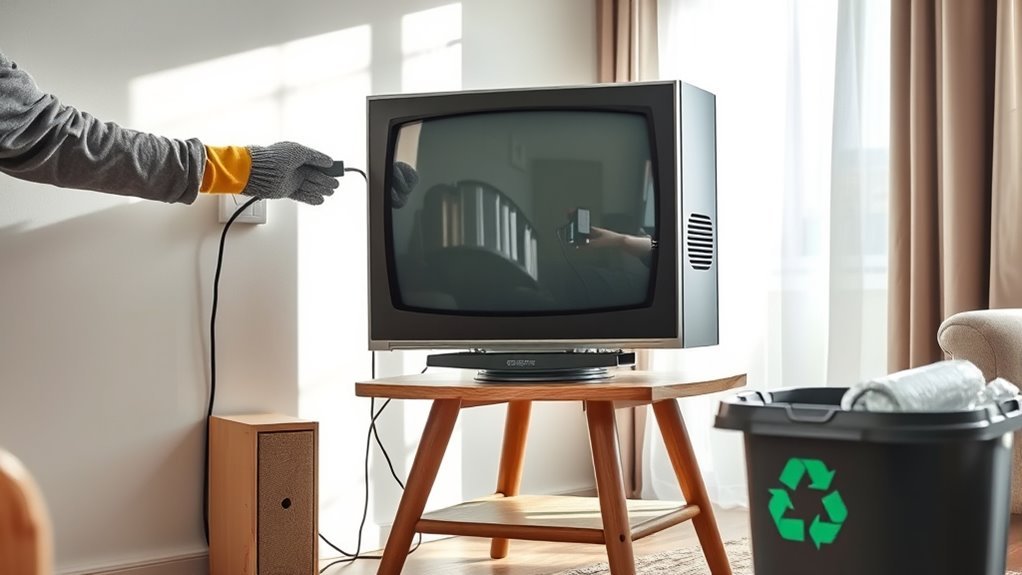
Before you dispose of your tube TV, make sure to power it down completely and unplug it from the wall. Handle the screen and any exposed components with care since they’re fragile and can break easily.
Taking these steps helps keep you safe and prevents damage during transport. It’s a simple way to avoid any accidents or costly repairs. Just a little caution goes a long way!
Power Down Completely
When you’re ready to dispose of your tube TV, make sure you power it down completely by unplugging it from the wall. This simple step prevents electrical hazards and protects you from potential shocks during handling.
Once unplugged, wait a few minutes to let any residual power drain from the TV. Handling a fully powered device can be dangerous, so don’t skip this essential step.
Here’s a quick reminder of why powering down matters:
| Feeling | Reason |
|---|---|
| Relief | No risk of electric shock |
| Confidence | Safe to move without worry |
| Responsibility | Protects you and the environment |
Powering down your tube TV fully keeps you safe and ensures a smooth disposal process. It’s a small effort that makes a big difference!
Secure Fragile Components
Although you’ve powered down your tube TV, you still need to secure its fragile components to prevent damage and injury. First, unplug the TV carefully from the wall outlet, pulling the plug rather than the cord to avoid damage.
Next, handle the glass screen with care—it’s heavy and easily cracked. Wrap the screen and any exposed parts in bubble wrap or thick blankets to cushion them during transport.
Secure loose cables and accessories with twist ties or rubber bands to keep everything organized. If your TV has detachable parts, remove and pack them separately.
Taking these steps reduces the risk of broken components and hazardous material exposure when disposing of your tube TV. Always prioritize safety while preparing your TV for disposal or recycling.
Remove or Secure Loose Parts to Prevent Damage
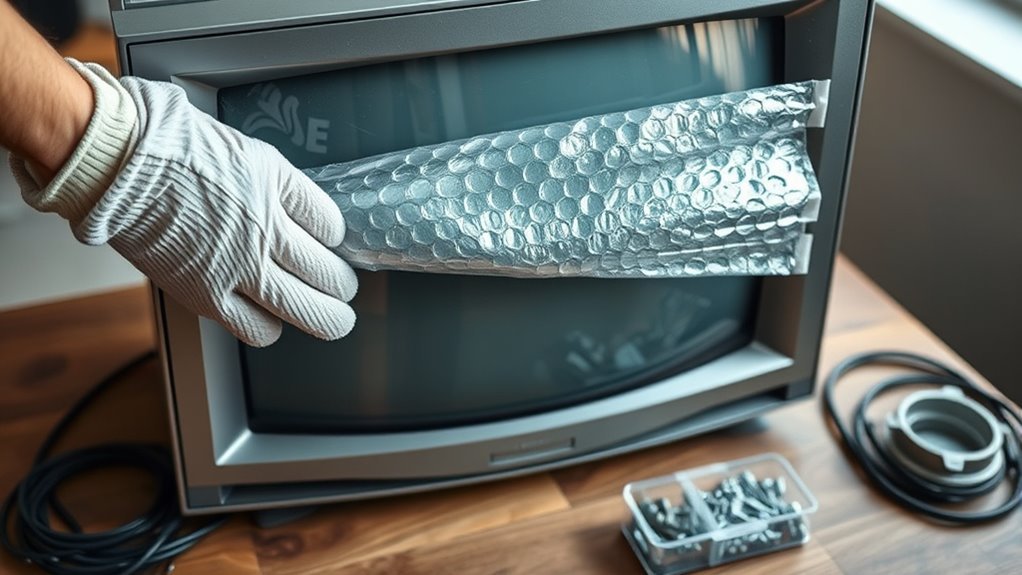
Since tube TVs contain fragile components, you should remove or secure any loose parts to prevent damage during handling and transport. Start by unplugging any cables or accessories connected to the TV.
Check for detachable parts like knobs, stands, or back panels and remove them carefully. If removal isn’t possible, use strong tape or bubble wrap to firmly secure these parts to the TV.
This prevents them from shifting or breaking during movement. Also, inspect the screen and casing for any loose elements and fasten them as needed.
Taking these steps helps protect both the TV and anyone handling it. By securing loose parts, you minimize the risk of damage, making the disposal process safer and more efficient.
Know Which Hazardous Materials Are Inside Your Tube TV
You should know that tube TVs contain toxic materials like lead, mercury, and cadmium. These substances can cause serious environmental harm if not handled properly.
Understanding these risks helps you dispose of your TV safely and responsibly. It’s really important to be aware of what’s inside before you toss it out.
Toxic Components Overview
What makes disposing of a tube TV so tricky? It’s the toxic components hidden inside. Your tube TV contains hazardous materials like lead, mercury, cadmium, and phosphor.
Lead is mainly in the glass of the CRT (cathode ray tube), making it heavy and dangerous if broken. Mercury is often found in small amounts within the circuitry or backlight.
Cadmium appears in some electronic parts and can cause serious health issues if mishandled. Phosphor coatings line the inside of the screen and can be harmful if inhaled or ingested.
Knowing these toxins helps you realize why you can’t just toss a tube TV in the trash. So, handle it carefully, and follow proper disposal methods to protect yourself and the environment.
Environmental Risks Explained
Although tube TVs might seem like harmless old electronics, the hazardous materials inside pose serious environmental risks if not disposed of properly. When you toss a tube TV in the trash, toxic substances like lead, cadmium, and mercury can leach into the soil and water, contaminating ecosystems and harming wildlife.
The lead in the glass and circuit boards can cause neurological damage in humans and animals over time. Mercury, found in some components, is highly toxic even in small amounts and can accumulate in the food chain.
Locate Certified E-Waste Recycling Centers for Tube TV Disposal
When disposing of a tube TV, locating certified e-waste recycling centers guarantees your old device is handled safely and responsibly. These centers follow strict guidelines to prevent harmful materials like lead and mercury from contaminating the environment.
To find one near you, check your city or county’s official website or use online directories dedicated to e-waste recycling. Look specifically for certifications such as R2 or e-Stewards, which indicate adherence to high environmental and safety standards.
Before dropping off your tube TV, call ahead to confirm they accept this type of electronics and inquire about any fees or preparation requirements. By choosing a certified recycler, you’ll protect your community and ensure your tube TV is recycled properly without risking pollution.
Use Manufacturer or Retailer Take-Back Programs for Tube TVs
Since many manufacturers and retailers offer take-back programs, you can often return your tube TV directly to them for safe disposal. Check the manufacturer’s website or contact the store where you bought the TV to see if they participate in such programs.
These take-back options guarantee your tube TV is handled responsibly, preventing hazardous materials from harming the environment. Some programs even provide prepaid shipping labels or local drop-off points, making the process easier for you.
Keep in mind that eligibility requirements and fees may vary, so confirm the details beforehand. By using these programs, you support recycling efforts and help reduce electronic waste.
Always follow the specific instructions provided to guarantee your tube TV is recycled properly. It’s a simple way to do your part and make sure your old TV doesn’t end up causing harm.
Book Professional Pick-Up Services for Your Tube TV
You can find local professional services that pick up tube TVs right from your home. Schedule a time that works best for you to make the process hassle-free.
Before pickup, make sure your TV is unplugged and ready to go for a smooth collection. It’s really that simple!
Finding Local Pickup Services
Several local services specialize in picking up old electronics, including tube TVs, making disposal easier and safer for you. To find the right service, start by searching online for “electronics recycling pickup” along with your city or zip code.
Many municipalities offer free or low-cost options, while private companies may charge a fee but handle everything professionally. It’s pretty convenient to have someone come to your place and take care of the heavy lifting.
Here’s a quick comparison to help you decide:
| Service Type | Key Features |
|---|---|
| Municipal Pickup | Often free, scheduled collection |
| Private Company | Flexible timing, may charge fees |
| Charity Programs | Donation options, some pickups |
Make sure to check reviews and confirm they handle tube TVs properly before booking your pickup. You don’t want any surprises when they come to collect your electronics.
Scheduling Convenient Collection
After identifying a reliable local pickup service, the next step is to arrange a collection time that fits your routine. Coordinating a convenient pickup guarantees the process goes smoothly without disrupting your day.
When booking, consider these factors:
- Available dates and time slots that work around your schedule
- Confirmation methods (email, text, or call) for the appointment
- Any fees or requirements associated with the pickup service
Also, think about how much advance notice the company needs before collection. And don’t forget to check their cancellation or rescheduling policies in case your plans change.
Preparing TV For Pickup
Though booking a professional pick-up service simplifies the process, preparing your tube TV properly guarantees a smooth and damage-free collection. Start by unplugging all cables and accessories, then securely wrap the TV in protective padding or bubble wrap.
Make sure to label fragile areas clearly to alert handlers. Also, make some space near your door to make the whole transport easier.
Here’s a quick checklist to prepare your TV:
| Task | Recommended Materials | Notes |
|---|---|---|
| Disconnect cables | None | Keep cables together |
| Wrap TV securely | Bubble wrap/blankets | Protect screen and corners |
| Clear pickup pathway | None | Remove obstacles |
Taking these steps helps ensure your tube TV reaches the disposal site safely, without any damage or delays.
Transport Your Tube TV Safely to the Disposal Site
When you’re ready to take your tube TV to the disposal site, make sure you secure it properly to prevent damage or injury during transport. Tube TVs are bulky and fragile, so handle them with care and use the right equipment to keep them stable.
Here’s how you can transport your TV safely:
- Use a sturdy dolly or hand truck to move the TV without straining yourself.
- Wrap the TV in thick blankets or bubble wrap to cushion it against bumps.
- Secure the TV upright in your vehicle with straps or ropes to prevent shifting.
- Avoid placing heavy objects on top of the TV during transport.
- Drive carefully, avoiding sudden stops or sharp turns to minimize movement.
Following these steps will help you transport your tube TV safely to the disposal site without accidents. It’s really all about being cautious and taking your time.
How to Erase Personal Data From Smart or Connected TVs (If You Have One)
Once you’ve safely transported your tube TV or any smart TV to the disposal site, don’t forget to protect your personal information if your TV has internet connectivity. Start by accessing the TV’s settings menu and look for options like “Factory Reset” or “Reset to Original Settings.” This will erase apps, accounts, and saved passwords.
Also, disconnect any linked streaming services such as Netflix or Hulu. If your TV has a cloud backup, make sure you delete stored data through the manufacturer’s website or app. Finally, remove any external storage devices like USB drives.
Taking these steps prevents unauthorized access to your accounts and personal data after disposal. It keeps you safe and your information secure.
Donate or Repurpose Your Working Tube TV Instead of Disposing
Why throw away a perfectly working tube TV when you can give it a second life? Donating or repurposing your tube TV helps reduce electronic waste and benefits others.
You can find local charities or community centers that accept tube TVs for reuse. Schools or theaters might also welcome them for retro gaming or educational projects.
If donation isn’t an option, consider repurposing it creatively in your home.
Here are some ideas to get you started:
- Use it as a vintage display for retro video games
- Convert it into an aquarium or terrarium
- Turn it into a unique piece of furniture or storage
- Create a digital photo frame inside the shell
- Donate to art programs for creative projects
This way, you extend your TV’s life and keep it out of landfills.
Frequently Asked Questions
Can I Use a Tube TV as a Decorative Item After Disposal?
Yes, you can use a tube TV as a decorative item! Just clean it up and make sure it’s unplugged.
Then, maybe repurpose it creatively. It adds a retro vibe and makes a great conversation starter in your space.
What Should I Do if My Tube TV Screen Is Cracked?
If your tube TV screen is cracked, don’t try to fix it yourself. Handle it carefully and avoid touching the broken glass.
It’s best to take it to a certified e-waste recycling center. That way, you can dispose of it safely and responsibly.
Are There Any DIY Methods to Recycle Tube TV Components at Home?
You can safely remove and repurpose some components like speakers or circuit boards for DIY projects.
Just be careful and take your time while doing it.
But avoid handling the CRT tube yourself—it contains hazardous materials best dealt with by professionals or proper recycling centers.
It’s really not worth the risk, so leave that part to the experts.
How Long Does the Disposal Process Typically Take at Recycling Centers?
The disposal process at recycling centers usually takes a few hours to a day, depending on their workload and equipment.
You can speed things up by scheduling an appointment and preparing your tube TV for drop-off in advance.
It really helps to be ready ahead of time, so you don’t waste any time when you get there.
Can I Trade in My Tube TV for a Discount on a New TV?
Think of trading in your tube TV like swapping an old baseball card for a shiny new one. Some stores offer discounts, but it’s pretty rare.
You might want to check out local retailers or online trade-in programs. See if you qualify—they sometimes have deals you wouldn’t expect.
Conclusion
Disposing of your tube TV safely isn’t just a task—it’s your small step toward a greener planet, like planting a seed in a vast forest. By unplugging, prepping, and choosing certified recycling, you honor both the past and the future.
Don’t just toss it away; think like a guardian of memories and materials. Whether donating or recycling, you’re turning an ending into a fresh beginning, one carefully handled tube at a time.
Remember, safe disposal of tube TVs helps reduce electronic waste and protects the environment from harmful chemicals. By following proper steps like selecting certified recyclers, you ensure your old TV is handled responsibly. So, next time you say goodbye to that bulky tube TV, know you’re making a positive impact. It’s more than disposal—it’s a commitment to sustainability and a cleaner, greener world.