Does TV Have Blue Light: How to Reduce Eye Strain
Yes, your TV emits blue light, especially LED models with backlighting. This blue light can cause eye strain and even disrupt your sleep patterns.
You can reduce these effects by lowering the brightness and setting warmer color temperatures on your TV. Many models also have built-in blue light filters—turn those on if you can.
Using blue light blocking glasses or screen filters is another great way to protect your eyes. Don’t forget to take regular breaks and blink often to ease any discomfort.
If you want to protect your eyes further and know when to seek professional advice, there’s more useful information ahead.
Key Takeaways
- TVs emit blue light, with LED models emitting more and OLED screens emitting less due to different backlighting technologies.
- Reducing screen brightness and setting color temperature to warmer tones effectively lowers blue light exposure and eye strain.
- Enabling built-in blue light filters or “eye comfort” modes on TVs helps minimize harmful blue light emission.
- Taking regular breaks, blinking frequently, and limiting continuous viewing reduces digital eye strain and dryness.
- Using external blue light filters or blue light blocking glasses provides additional protection against eye discomfort and visual fatigue.
How Much Blue Light Do TVs Really Emit?
While it’s easy to assume all screens emit the same amount of blue light, TVs actually vary depending on their technology and settings. You might notice that LED and OLED TVs produce different levels of blue light due to their distinct panel structures.
Not all TVs emit the same blue light; technology and settings make a big difference.
LED TVs tend to emit more blue light because they use backlighting, while OLEDs emit less since each pixel lights up individually. The brightness level you set also impacts blue light emission; higher brightness means more blue light.
Additionally, the color temperature plays a role—cooler settings increase blue light, while warmer tones reduce it. So, the exact amount of blue light your TV emits depends on these factors.
That means you can control exposure by adjusting your viewing habits. It’s pretty handy once you know how your TV works!
TV Types and Settings That Reduce Blue Light
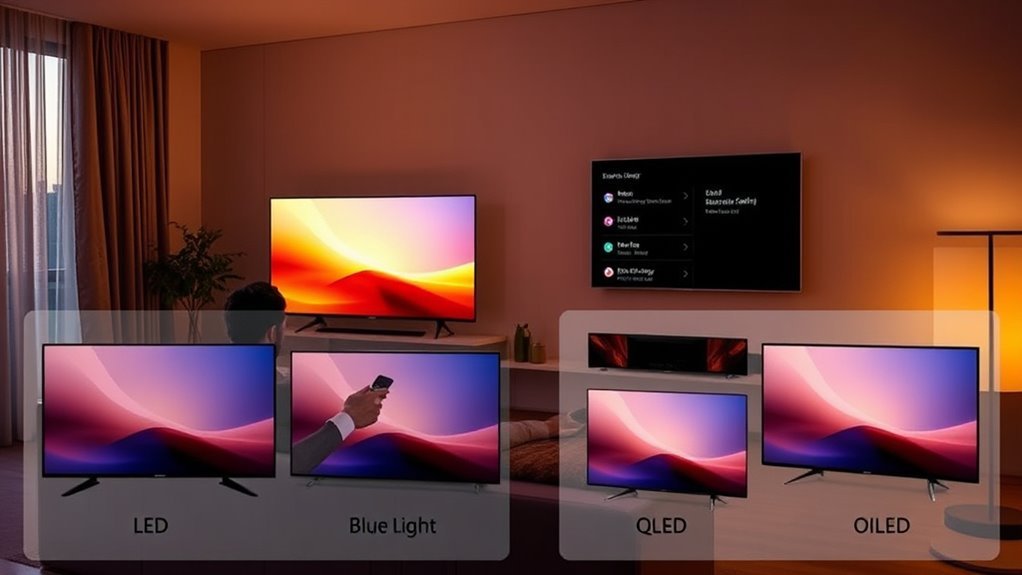
You can reduce blue light exposure by choosing the right TV type, like OLED, which generally emits less blue light than LED screens.
Adjusting your TV’s display settings, such as lowering brightness or enabling blue light filters, also helps.
Let’s explore how these options make a difference for your viewing comfort.
OLED vs. LED Blue Light
Although both OLED and LED TVs emit blue light, their underlying technology affects the amount and quality of that light. OLED screens use organic compounds that emit light individually, allowing for deeper blacks and less overall brightness.
This often results in softer blue light exposure, which can be easier on your eyes during extended viewing. In contrast, LED TVs use a backlight behind an LCD panel, producing brighter and sometimes harsher blue light.
If you’re sensitive to blue light, an OLED might reduce eye strain naturally due to its ability to control pixel-level brightness. However, both types still emit blue light, so it’s important to weigh your viewing habits.
Choosing between OLED and LED depends on your sensitivity and preferences for picture quality and eye comfort.
Adjusting TV Display Settings
Understanding how different TV technologies impact blue light exposure helps when adjusting your display settings to reduce eye strain. OLED TVs typically emit less blue light than LED TVs, but both allow you to customize settings.
Start by enabling your TV’s built-in blue light filter or “eye comfort” mode if available. These modes reduce blue light emission by shifting colors toward warmer tones.
Next, lower your screen’s brightness and contrast to comfortable levels—too bright or high contrast can strain your eyes. If your TV supports manual color temperature adjustments, set it to a warmer setting.
Also, try reducing the sharpness and turning off dynamic contrast or motion smoothing features. These can actually increase blue light exposure.
Making these tweaks can considerably ease eye strain during long viewing sessions. It’s worth taking a few minutes to adjust your settings for a more comfortable watch.
How Blue Light Affects Your Eyes and Causes Strain
When your eyes absorb too much blue light from screens, they can become fatigued and uncomfortable. Blue light penetrates deep into your eyes, causing strain by forcing your eye muscles to work harder to focus.
This can lead to symptoms like dryness, irritation, and blurred vision. Plus, blue light exposure interferes with your natural sleep cycle, which can indirectly make eye discomfort worse.
Here’s how blue light affects your eyes:
- Causes digital eye strain by overworking your eye muscles
- Reduces blink rate, leading to dryness and irritation
- Increases glare, making it harder to focus
- Disrupts melatonin production, affecting sleep and eye recovery
Knowing these effects helps you understand why managing blue light exposure is so important for your eye health. It’s all about giving your eyes a break and protecting them in the long run.
Simple Habits to Reduce Blue Light Eye Strain
You can ease blue light eye strain by adjusting your screen brightness to a comfortable level. Using blue light filters on your devices helps reduce harmful exposure.
And hey, don’t forget to take regular breaks to give your eyes some rest. It really makes a difference!
Adjust Screen Brightness
Although many people overlook it, adjusting your screen brightness can considerably reduce blue light eye strain. When your TV or monitor is too bright or too dim, your eyes work harder, increasing discomfort.
To protect your eyes, follow these steps:
- Match your screen brightness to your room’s lighting to avoid contrast strain.
- Lower brightness when watching in a dark room to minimize glare.
- Increase brightness in well-lit environments to maintain clear visibility.
- Regularly reassess brightness settings throughout the day as lighting changes.
It’s a simple tweak, but it makes a big difference! Just keep an eye on your screen and adjust as you go.
Use Blue Light Filters
Since blue light can contribute to eye strain, using blue light filters offers a straightforward way to reduce its impact. You can easily apply these filters on your TV screen or other devices to block or absorb a portion of the blue light emitted.
Many modern TVs come with built-in blue light reduction settings—make sure to enable them. Or, if you prefer, you can purchase screen protectors designed specifically to filter blue light.
These filters help lessen glare and reduce the harshness of blue light, making your viewing experience more comfortable. By incorporating blue light filters into your daily routine, you protect your eyes from excessive exposure.
This can minimize discomfort and fatigue during prolonged TV watching. It’s a simple habit that goes a long way in preserving your eye health.
Take Regular Breaks
Whenever you watch TV for long stretches, your eyes can quickly become strained from constant exposure to blue light. Taking regular breaks helps reduce this strain and refreshes your eyes.
To protect your vision, try this simple routine:
- Every 20 minutes, look away from the screen and focus on a distant object for 20 seconds.
- Blink frequently to keep your eyes moist and avoid dryness.
- Stand up and stretch your body to improve circulation and reduce fatigue.
- Limit continuous TV watching sessions to no more than an hour without a longer break.
Best Blue Light Filters and Glasses for TV Viewing
If you want to protect your eyes from the blue light emitted by your TV, choosing the right blue light filter or glasses can make a big difference. Look for filters that easily attach to your TV screen without affecting picture quality.
These filters reduce blue light exposure and help prevent eye strain during long viewing sessions. Alternatively, blue light blocking glasses designed specifically for screen use are effective and convenient.
Pick glasses with lenses that block at least 30% of blue light while maintaining color accuracy. Some models also reduce glare, which further eases eye discomfort.
When to See an Eye Doctor About Blue Light Discomfort
Although blue light filters and glasses can reduce discomfort, you should see an eye doctor if you experience persistent eye strain, headaches, or blurred vision after watching TV or using other digital screens. These symptoms may indicate underlying issues that require professional evaluation.
Persistent eye strain or headaches from screens may signal issues needing professional eye care.
You should book an appointment if you:
- Notice continual dryness or irritation in your eyes despite using protective measures.
- Experience frequent headaches linked to screen time.
- Have trouble focusing or see halos or glare around lights.
- Feel discomfort that worsens over time or affects your daily activities.
An eye doctor can assess your vision, check for digital eye strain, and recommend treatments or lifestyle changes tailored to your needs. Don’t wait—early intervention can prevent long-term damage.
Frequently Asked Questions
Can Blue Light From TVS Disrupt Sleep Patterns?
Yes, blue light from TVs can disrupt your sleep by suppressing melatonin production. This hormone is key to helping you fall asleep and stay asleep.
To protect your sleep patterns, you should limit screen time before bed. Also, try using blue light filters or night mode on your TV. These tools can really help reduce the impact of blue light.
Do Children’s Eyes Get More Affected by TV Blue Light?
Yes, children’s eyes are more sensitive to TV blue light. You should limit their screen time and use blue light filters or glasses to protect their developing eyes.
This helps reduce the risk of eye strain and sleep disruption. It’s a simple way to keep their eyes healthy while they enjoy their favorite shows.
Are There Apps That Adjust TV Blue Light Automatically?
You know what they say, “An ounce of prevention is worth a pound of cure.”
Yes, some smart TV apps automatically adjust blue light. They help protect your eyes without you having to do a thing.
This way, you can enjoy your favorite shows comfortably and safely.
Does Screen Size Influence Blue Light Exposure?
Screen size doesn’t directly affect blue light exposure; the intensity depends on brightness and distance.
You can reduce eye strain by lowering brightness, using blue light filters, and keeping a proper viewing distance regardless of screen size.
It’s really about how bright your screen is and how close you sit to it, not how big the screen is. So, focusing on those factors will help protect your eyes better.
Can TV Blue Light Cause Permanent Eye Damage?
You won’t get permanent eye damage from TV blue light, even though 60% of people report eye strain from screens.
To protect your eyes, take breaks and reduce screen brightness regularly—it really helps prevent discomfort.
Conclusion
Did you know that up to 60% of your daily blue light exposure can come from screens like your TV? It’s easy to underestimate how much this affects your eyes.
By adjusting your TV settings, using blue light filters, and taking simple breaks, you can protect your vision and reduce eye strain. These small changes really make a difference.
Don’t wait—start these habits today. If discomfort persists, see an eye doctor to keep your eyes healthy and comfortable. Reducing blue light from your TV is a smart way to ease eye strain and maintain good eye health over time.